TPNPB Killed 82 Papuan Civilians, from Teachers to Gold Panners
Across the 28 incidents we documented, 82 Papuan civilians were killed. Some were claimed by the armed group itself. The company behind the film it calls a campaign tool received a 251,983-dollar grant from an institution led by George Soros.
Redaksi Papua Blood Money2026-10-09 · 13 min read
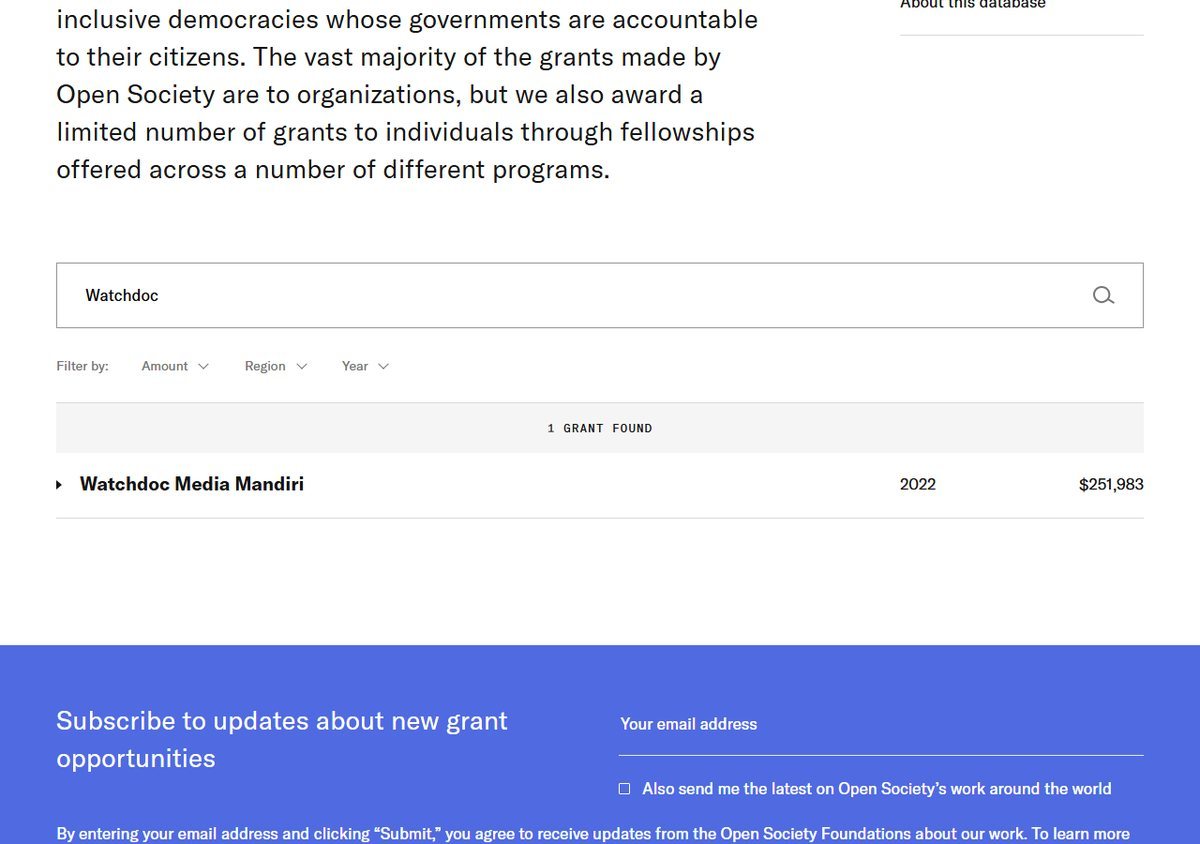
Screenshot: opensocietyfoundations.org, accessed 9 October 2026
Eighty-two Papuan civilians were killed in the 28 incidents we have documented and published on this site. Fifteen more were wounded, nine are missing. They were not combatants. They were teachers, drivers, gold panners, road workers, civil servants, women and children.
Their killers were not a foreign army and not the state. Most of those incidents were carried out by an armed group calling itself the West Papua National Liberation Army. In several cases the group openly claimed the act to the media.
This site stands on the side of the Republic of Indonesia, and we say so from the outset. But the sharpest truth in this record does not come from government statements. It comes from the list of Papuans who died at the hands of those who claim to be liberating them.
A roll of names that should stop anyone cold
A water-delivery worker, Jhonsep Salempang, 23, was stabbed in Dekai in March 2024. A civil servant at the Yahukimo inspectorate, Yosep Pulung, 55, was stabbed in front of a primary school in April 2024. The village head of Modusit, Timo Kasipmabin, 45, was killed in Pegunungan Bintang in April 2024.
A project worker from Makassar, Raimon Gustam Kailimang, was shot while collecting water in Sugapa. A timber-processing worker from Manado, Steven Wakari, 48, was shot in Intan Jaya. Two motorcycle-taxi drivers from South Sulawesi, Imran, 23, and Asrul, were shot dead in Puncak in November 2024.
Indra Guruwardana, 24, was shot twice in Asmat, then his house and shop were burned. Anselmus Arfin, 25, a project worker, was shot from the left in Intan Jaya. A Dekai resident was stabbed five times in his own home. Two teachers at Beoga, Oktovianus Rayo and Yonathan Randen, were shot dead in April 2021, and their school was burned over two consecutive nights.
In Anggruk in March 2025, the teachers' housing complex of the YPPGI primary school was attacked. One person died, six were wounded and the school was burned. A teacher ran into the forest and hid until morning.
Eighty-two people, and almost all of them ordinary residents
Ten traditional gold panners were killed and two wounded in an attack at Kawe village on 18 May 2026. Seven gold panners were killed in Seradala, Yahukimo, on 20 September 2025. Sixteen people were killed at Lokasi 22 and Muara Kum, Yahukimo, on 6 and 7 April 2025.
Five road workers were killed in a night attack on 2 August 2026 in the Kali Kabur area of Tolikara. Four worked for one company, one for another. The armed group claimed responsibility for the attack.
Three staff of the Jayawijaya district agriculture office were executed on 9 September 2026 in Muliama. Two weeks later, on 15 September 2026, a route driver named Aris Sanda, 41, from Toraja, was stopped on the Wamena-Nduga road. He was forced to declare support for a free Papua on camera, then shot, and his car burned with him inside.
On 17 August 2026, nine women and children were taken by force from Jila, Mimika. One person died and one was wounded. Those abducted were the people least able to defend themselves.
Much earlier, on 2 December 2018, nineteen workers on the Trans-Papua bridge project in Nduga died in a single attack. Most of them were Papuans earning a living by building roads in their own land.
Across those 28 incidents, the largest category of victims is not security personnel. It is construction workers, traditional gold panners, farmers and transport workers. This is not the result of stray bullets. This is a pattern.
How they label the victims: spies
A second recurring pattern is the justification. After shooting, the armed group labels its victim a spy, an intelligence agent or an infiltrator. That label has been applied to almost every civilian they have killed, from teachers to gold panners.
The group's spokesperson, Sebby Sambom, has repeated the same three things in his statements to the media for years. First, a claim of responsibility. Second, the assertion that the victim was a spy. Third, a threat that more will follow.
That description is not our interpretation of events. It comes from interviews and releases we have compiled from 2018 to 2026, with dates and sources, in our report on the spokesperson.
This is the crux of the problem for every journalist in Papua. Once the victim has been labelled a spy in advance, coverage of the death can be framed as the outcome of a legitimate military operation rather than as the killing of a civilian.
And that label is now tightly guarded. On 8 June 2026 the TPNPB central headquarters ordered all journalists to publish war reports only through their single channel, via the spokesperson, and barred troops in 36 regional commands from reporting directly to the media.
The meaning is simple and stark. One party controls the story of who dies and why. That party also decides who may be called a spy.
Foreign money, and what we cannot prove
What we can prove about the money is this, and only this. In 2022 the Open Society Foundations, the institution founded by George Soros, granted Watchdoc Media Mandiri 251,983 US dollars over 18 months. We read it directly in the foundation's official grants database, which returns a single result for the keyword Watchdoc.
In rupiah, at Rp15,500 to the dollar, that is about Rp3.9 billion. The purpose listed by the foundation is to produce educational materials including reports and documentaries to counter disinformation, through investigative reporting, discussions and media training.
We also found two other foreign involvements, both recorded on their own official websites. Germany's Friedrich Ebert Stiftung worked with the Alliance of Independent Journalists and Watchdoc in 2016 on a documentary about health insurance. The US-based Henry Luce Foundation funded the documentary series Indonesian Pluralities, made with Watchdoc, CRCS UGM and Boston University.
Beyond that, nothing. The National Endowment for Democracy, USAID, the Ford Foundation, international financial institutions and embassies do not appear in their grant databases as funders of Watchdoc or of Dandhy Laksono.
Nor did we find any document showing millions of dollars going to Dandhy Laksono. The documented figure is 251,983 dollars to his company in 2022. Anyone citing a much larger sum must produce the document, and we have not seen it.
What is missing matters just as much. No annual report, audit report or tax document from Watchdoc has been published. The company has been a limited liability company since 2011, not a foundation, so the obligation to publish summaries of foreign aid does not automatically apply to it.
The question about the source of the money is not one we invented. The Army Chief of Staff, General Maruli Simanjuntak, raised it on 19 May 2026 in a short line: where does the money come from?
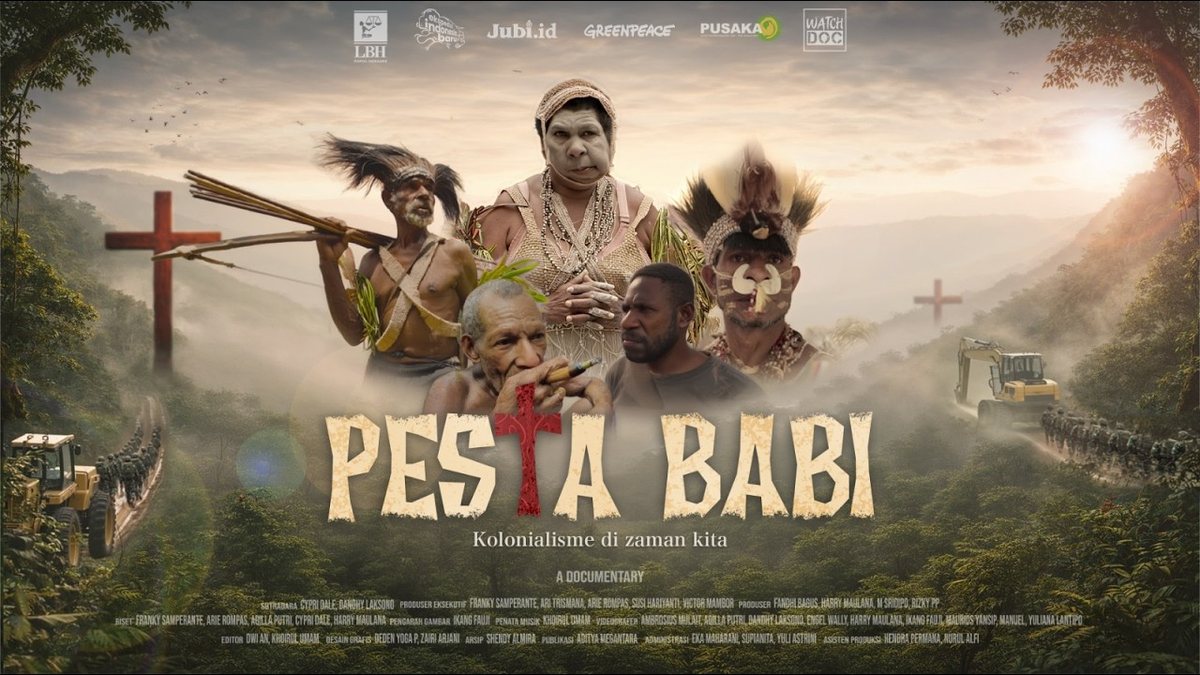
The film an armed group said helps its campaignPig Feast was uploaded in full to the Jubi TV channel on 22 May 2026 and has been watched more than 15 million times.Image: Jubi TV channel on YouTube
Dandhy Laksono answered with several versions. For the film Dirty Vote in 2024 he described a pooled production whose cast were unpaid. For Pig Feast he said collaborating institutions pooled the money, with Watchdoc contributing cameras and camera operators. In another interview he answered a question about the budget with one line: it exists, that is enough.
The film the armed group says helps them
The film Pig Feast: Colonialism in Our Time was directed by Dandhy Laksono with Cypri Paju Dale and co-produced with Victor Mambor, produced by Watchdoc. It premiered in Auckland, New Zealand, on 7 March 2026 and circulated widely from April 2026.
What brings this film to these pages is not its content as a work, but its function. On 4 June 2026, TPNPB Kodap III Ndugama Derakma stated that the film greatly helps the people of West Papua advocate and campaign on the issues of Indonesian military operations.
Two battalion commanders of the group signed that statement. They also asked President Prabowo Subianto to stop what they called the criminalisation of Dandhy Laksono and LBH Merauke.
Note the connection. A film produced by a company that received a grant from an institution led by George Soros is described by an armed group, in its own words, as a campaign instrument. Both facts stand separately and both are documented.
What we may not write further is causality. No document links that grant to the purchase of weapons, to payments to fighters, or to the killings of civilians we recorded. We refuse to close that gap with invention, even though the result would sound harsher.
The film itself has now been watched more than 15 million times on the Jubi TV YouTube channel, where the full film was uploaded on 22 May 2026. Organisers recorded more than 11,200 screening requests, with screenings in Australia, New Zealand, the United States, Europe and the Pacific.
The woman who turned against its makers
One of the film's central figures, Yasinta Moiwend, a woman of about 64 from the Malind people of Wanam village, Merauke, reported Dandhy Laksono and the head of LBH Pos Merauke to Jakarta police on 29 May 2026. The report number is LP/B/3843/V/2026/SPKT. She contested the use of her personal data without consent.
Her family says she left home on 23 May 2026 and later turned up in Jakarta. The Ministry of Defence and the military deny involvement. TPNPB went further and claimed she was isolated at the State Palace, a claim supported by no evidence.
A film used by an armed group as a campaign instrument has been left behind by the woman who was its face, and her grievance went to the Indonesian police, not to the international forums where the film was screened.
A question that came late
After four civilians were killed in September 2026, Dandhy Laksono posted a question on his social media. Were they, he wrote, turning from freedom fighters into a band of war criminals?
The question is fair. The problem is when he asked it. For years before that he used the terms fighters and guerrillas for the same group, when its victims were gold panners, motorcycle-taxi drivers, teachers and drivers.
That criticism came from Papuan media itself. Ufuk Timur wrote on 17 September 2026 that Dandhy questioned TPNPB's conduct only after civilians died, not in 2021 when teachers in Beoga were shot dead, or in 2018 when nineteen bridge workers died in Nduga.
Other criticism touches how the film is built. The information chief of Kodam XVII/Cenderawasih called its narrative one-sided. Analyst Rico Marbun saw a communication pattern pointing towards building a narrative of Papuan separation from Indonesia. One review argued the title risks distorting the meaning of a local tradition.
From the other side, ULMWP president Benny Wenda judged the film too mild and said it fails to show what he calls the real truth. In other words, even the side that wants Papua out of Indonesia considers the film not harsh enough. Neither assessment erases one fact: the armed group uses the film.
What the state can and cannot do
For prosecuting the killings of civilians, the legal basis is clear. The terrorism law contains Article 13A, covering the spread of speech or writing that incites and results in a terrorism offence. The press law requires verification and the service of a right of reply, with criminal penalties for ignoring it.
The Press Council's terrorism coverage guidelines prohibit reporting that promotes, legitimises or glorifies perpetrators. Those guidelines exist precisely because flawed coverage can strengthen armed groups.
For foreign funding flows, the reference is Article 37 of Law No. 17 of 2013, requiring foreign aid be managed transparently, accountably and through a national bank, and Article 61, prohibiting foreign donations contrary to law. Presidential Regulation No. 18 of 2017 governs donor identification and joint oversight with the Financial Transaction Reports and Analysis Centre.
Two corrections still need stating so that legal citations are not misused. In 2025 the Constitutional Court limited the meaning of unrest in the Electronic Information and Transactions Law to physical unrest, not unrest in digital space. Articles 207 and 208 of the Criminal Code cover insults to the authorities, not enmity towards the state.
And one more thing we must state honestly. We found no court ruling in Indonesia convicting a journalist merely for publishing an armed group's claim without confirmation. Such matters have so far been handled through ethics, right of reply and the Press Council.
What remains a question
We close by separating what is proven from what is not, because this site works on a simple rule. It may be hard. It may not invent.
What is proven: 82 Papuan civilians killed in the 28 incidents we documented, with names, dates and places. Some of those incidents were claimed by the armed group itself. That group ordered journalists to publish war reports through one channel only. That group said a film helps its campaign. The company behind that film received a 251,983-dollar grant from an institution led by George Soros in 2022. The film's central figure reported its makers to Indonesian police.
What is not proven: that the foreign money bought weapons, paid fighters, or financed the killing of Papuans. We will not write it as fact, and we will put such an allegation on this page the moment the documents are in our hands.
For us the order of importance is clear. First comes not who sent the money, but who pulled the trigger and who died. The eighty-two names in our records are Papuans. Their killers are also Papuans who claim to be fighting for them.
Timeline
Nineteen Trans-Papua bridge project workers were killed in a single attack in Nduga.
A teacher at Jambul Beoga primary school, Oktovianus Rayo (42), was shot dead at his kiosk.
A teacher at Beoga 1 state middle school, Yonathan Randen (28), was shot dead.
Schools in Beoga district were burned over two consecutive nights.
Civilian pilot Phillip Mark Mehrtens was held hostage in Nduga for 19 months.
Jhonsep Salempang (23), a water-delivery driver, was stabbed in Dekai.
Yosep Pulung (55), a civil servant, was stabbed in front of a Dekai primary school.
Timo Kasipmabin (45), village head of Modusit, was killed in Pegunungan Bintang.
Two motorcycle-taxi drivers from South Sulawesi, Imran (23) and Asrul, were shot in Puncak.
Sixteen people were killed at Lokasi 22 and Muara Kum, Yahukimo.
The teachers' housing complex in Anggruk was attacked; one died, six were wounded, the school burned.
Seven gold panners were killed in Seradala, Yahukimo.
Ten gold panners were killed and two wounded in an attack at Kawe village.
TPNPB Kodap III said the film Pig Feast helps its advocacy and campaigning on Indonesian military operations.
The TPNPB central headquarters ordered journalists to publish war reports only through its spokesperson.
Five road workers were killed in a night attack at Kali Kabur, Tolikara; the armed group claimed responsibility.
Nine women and children were taken by force from Jila, Mimika; one died, one was wounded.
Three Jayawijaya agriculture office staff were executed in Muliama.
Driver Aris Sanda (41) was stopped on the Wamena-Nduga route, forced to declare support, shot, and burned with his car.
The TPNPB central headquarters ordered all journalists to publish war reports only through its single channel, a day after a Papuan outlet ran a solidarity statement for a film the group said helps its campaign on military operations.
A recording uploaded on 18 August 2026 carries a call to shoot Human Rights Minister Natalius Pigai, alongside a ban on his entering Papua. The written statement behind it asks the UN to blacklist him.
6 sources · 2026-10-08
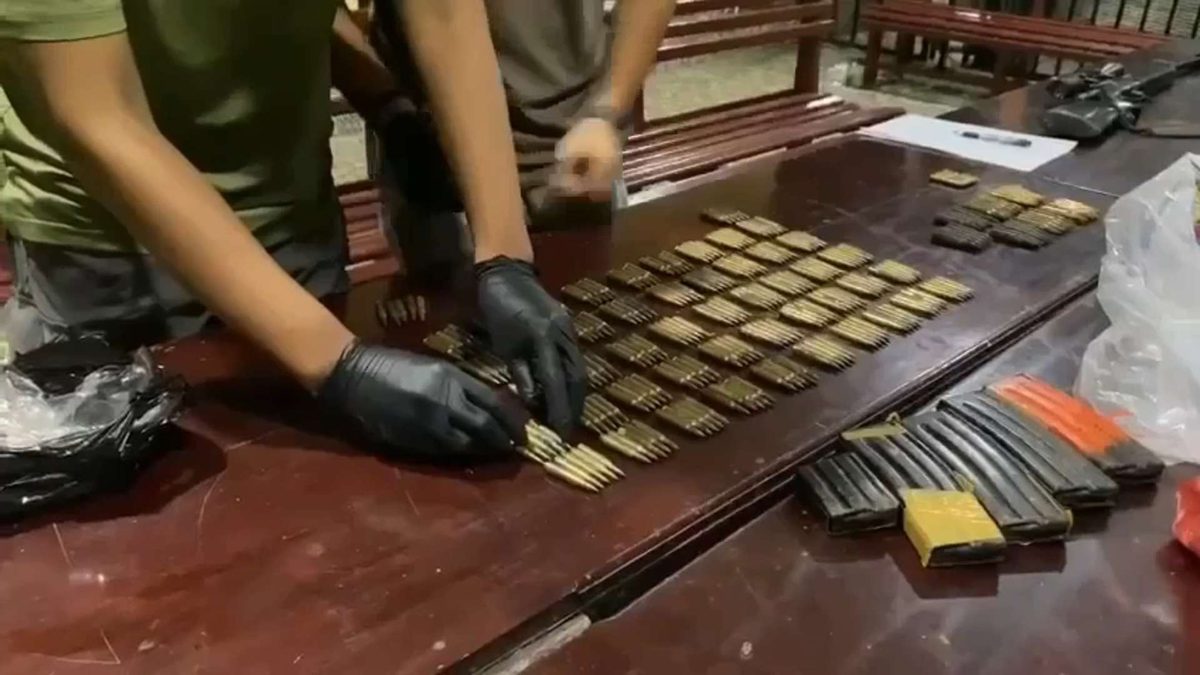
Photo: Satgas Humas Operasi Damai Cartenz 2026 (via papua60detik.id)
For seven months, investigators at the Papua regional police traced who bought the weapons, who paid for them, and who supplied the ammunition. The case began with a single transaction at a traffic junction near Sentani's old market. It now involves 17 suspects, 298 rounds of ammunition, SS1 magazines, one homemade firearm and six rusted World War II-era barrels.
24 sources · 2026-10-07
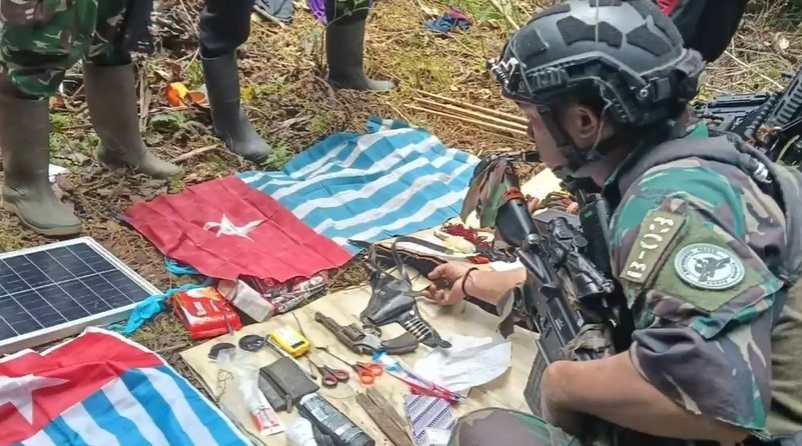
Photo: Okezone, published in the October 4 2026 report, used with credit
A joint TNI force first asked the armed group TPNPB-OPM Kodap IV Sorong Raya to lay down its weapons in the forest of Aifat district, Maybrat regency, on the night of Saturday 3 October 2026. The answer was live fire. Two of their commanders died, no soldier was hurt, and Manfret Fatem fled. From the site, troops seized a revolver, ammunition, a radio, and two Morning Star flags.
45 sources · 2026-10-06
Photo: WartaPlus (wartaplus.com), used with attribution
From a place in Papua New Guinea, the spokesperson of the TPNPB-OPM has for eight years delivered the same sentence: we are responsible, they were spies, and we will continue. This feature reconstructs his own admissions, then examines where the money for weapons actually comes from. The answer is not foreign funding. Court records name rogue state personnel, village funds, unlicensed gold mines, and levies imposed on Papuans themselves.
80 sources · 2026-10-06
Photo: TEDxSydney / Fe Lumsdaine (CC BY-SA 2.0), via Wikimedia Commons
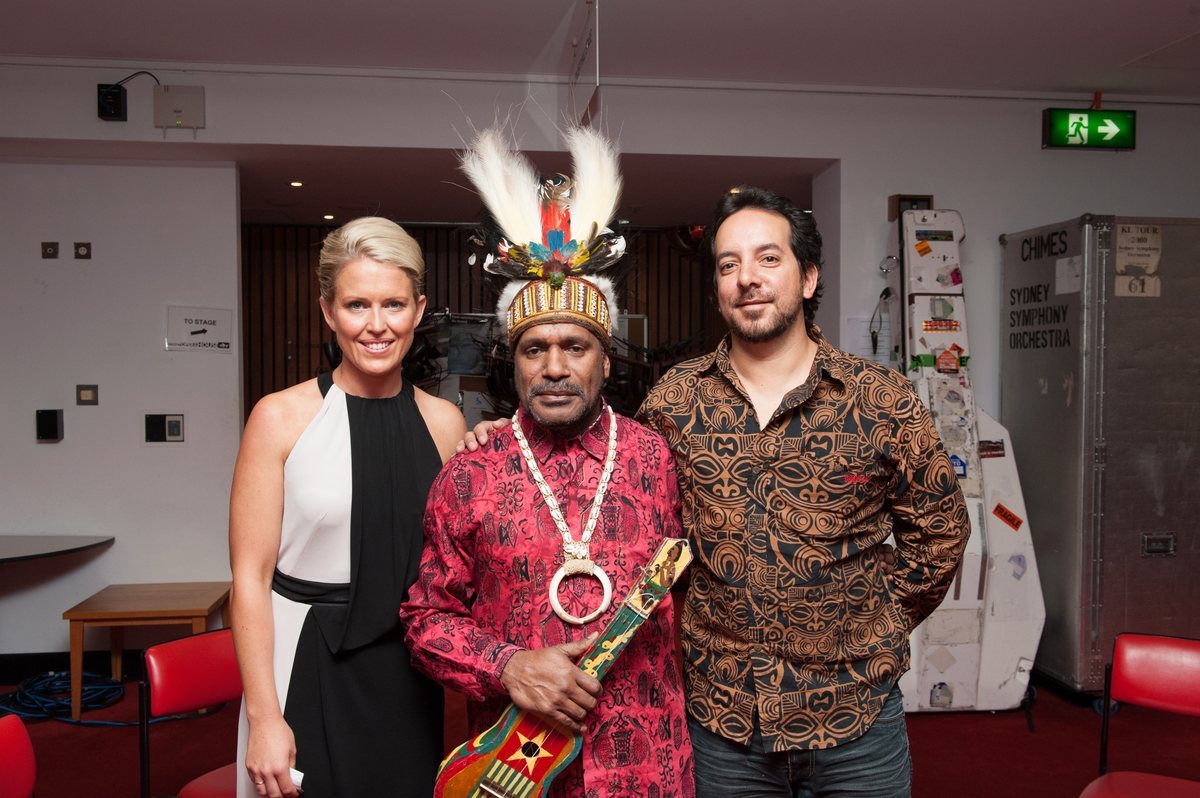
This site stands with the Indonesian government: Papua is a lawful part of the Republic of Indonesia, and not a single country recognises the “government” he declared. This dossier tests an exile's claims against public documents — death tolls never verified, a petition the UN never received, accounts never opened — and records who pays the price in Papua.
90 sources · 2026-10-06
Photo: Fajar Papua. Copyright remains with the owner.
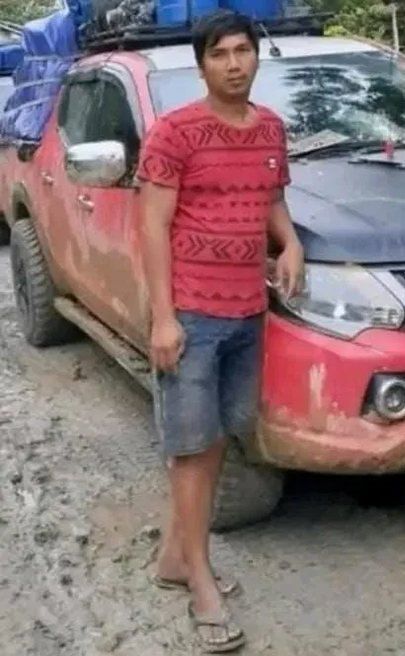
For 13 years he carried passengers and supplies along the grueling and dangerous Trans Wamena–Nduga route, sacrificing himself every day to meet the basic needs of the Wamena–Nduga community, yet that sacrifice was not deemed worthy by the TPNPB. His life was cruelly torn away. On 15 September 2026 he was intercepted at the Danau Habema junction, forced on camera to declare support for a free Papua, then shot and burned inside his own vehicle.
14 sources · 2026-10-05
Photo: Dok. Istimewa via detikcom. Copyright remains with the owner.
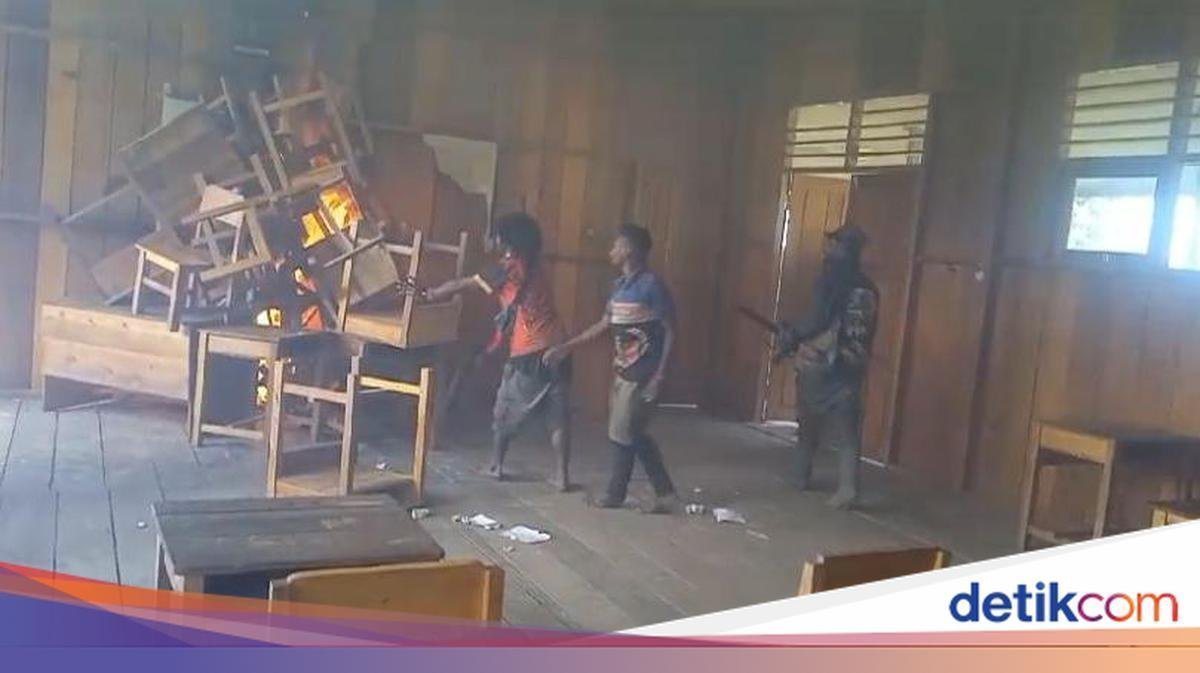
One teacher was killed and six wounded in Anggruk district, Yahukimo, in March 2025. Behind the corrected casualty figures lies a rarely asked question: money for services flows into these districts, yet no budget line protects the people who teach in them.
Two teachers from Toraja were killed on 8 and 9 April 2021 in Beoga district, Puncak regency. Two days later, 12 classrooms and teachers' houses had been razed, and about 400 children had lost their place to study. The government put the damage at 7.2 billion rupiah. What never entered anyone's calculation: the cost of protecting the people who teach there.
79 sources · 2026-10-05
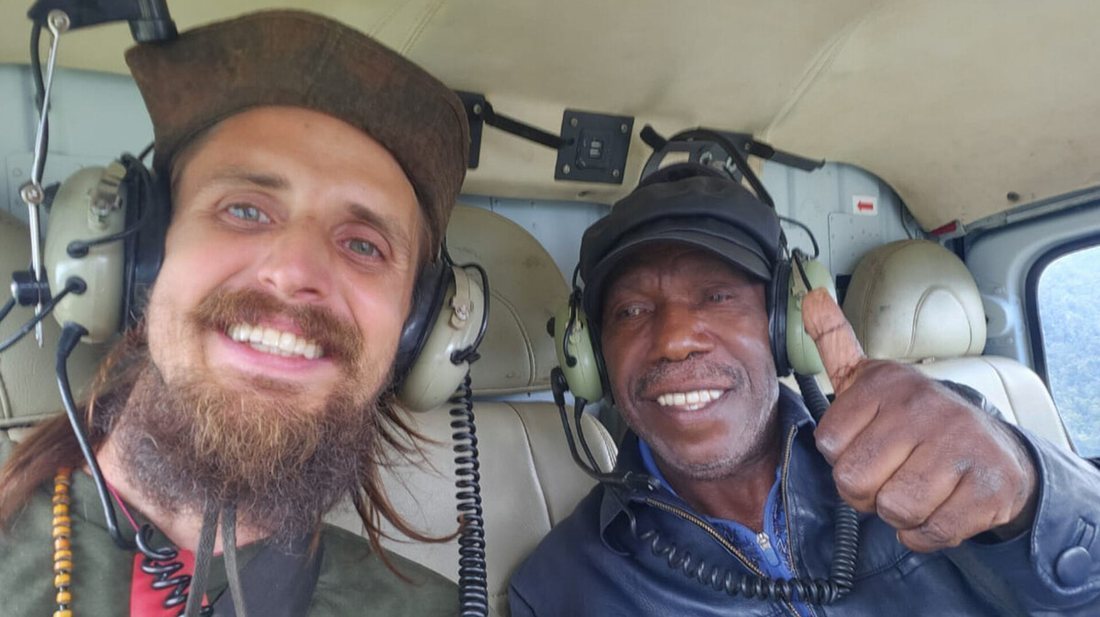
Phillip Mehrtens in a helicopter on the day of his release, 21 September 2024. Photo: Kompas.id (used with credit)
The New Zealand civilian pilot landed at Paro on 7 February 2023, then vanished from the outside world for 19 months. This is the full account, from the first day to the handover in Jakarta — including what remains disputed.
35 sources · 2026-10-05
Editorial illustration · not an incident photograph
Organizational and fundraising tracks can be checked. To state that money finances armed groups, a chain of evidence is needed that connects giver, recipient, transaction and use.