TPNPB Bars Journalists from Taking War Reports, Warns Papuan Media
The TPNPB central headquarters ordered all journalists to publish war reports only through its single channel, a day after a Papuan outlet ran a solidarity statement for a film the group said helps its campaign on military operations.
Redaksi Papua Blood Money2026-10-09 · 12 min read
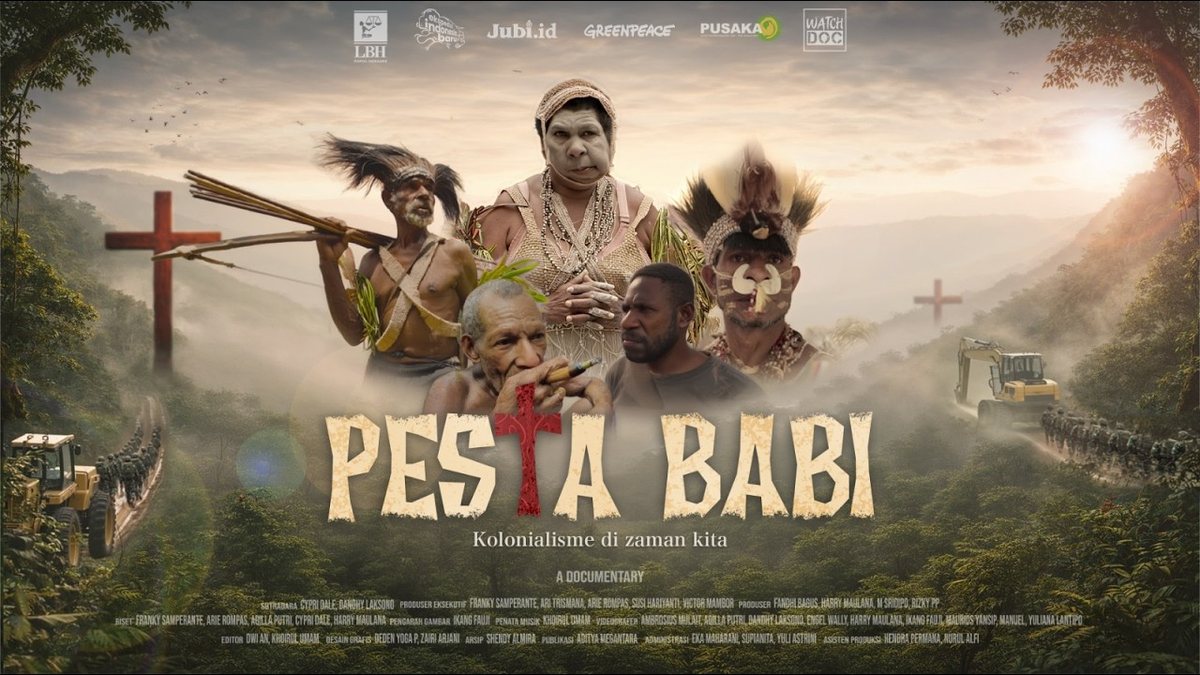
Image: Jubi TV channel on YouTube, the film Pig Feast: Colonialism in Our Time (uploaded 22 May 2026)
On 4 June 2026, a report came out of Kodap III Ndugama Derakma. Two battalion commanders, Major Yibet Gwijangge and Major Soa-soa Karunggu, declared support for the director of the documentary Pig Feast, Dandhy Laksono. In their words, the film “greatly helps the people of West Papua advocate and campaign on the issues of Indonesian military operations”.
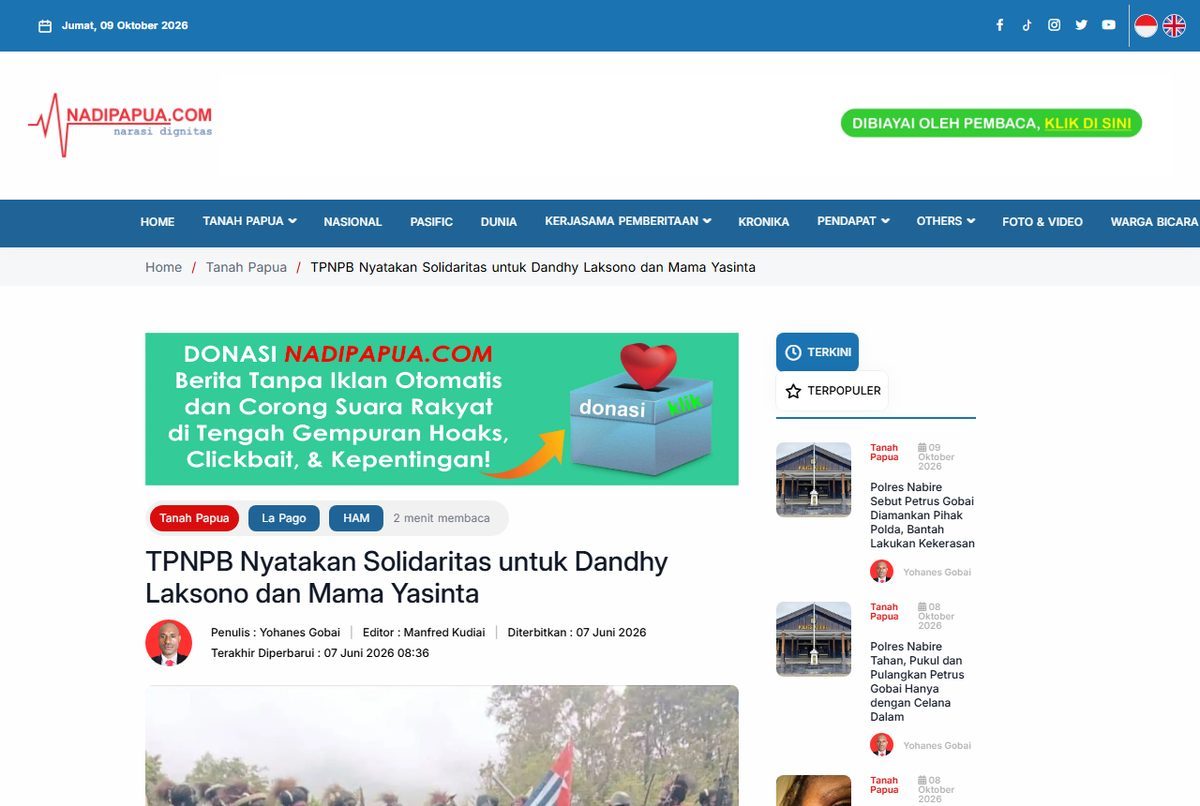
Three days later, on 7 June 2026, the outlet Nadi Papua published that statement in a report titled “TPNPB Declares Solidarity with Dandhy Laksono and Mama Yasinta”, written by Yohanes Gobai and edited by Manfred Kudiai.
A day later, what arrived was not gratitude. The Central Headquarters of KOMNAS TPNPB issued a press release warning that very outlet, and every journalist in Papua, to stop publishing TPNPB reports outside the organisation’s official channel.
Its opening line was blunt. “All war reports and official releases must be confirmed with the Central Headquarters management of KOMNAS TPNPB through the TPNPB spokesperson Sebby Sambom,” the release read. Four leaders signed it: Commander-in-Chief Goliath Tabuni, Deputy Commander Melkisedek Awom, Chief of Staff Terianus Satto and General Operations Commander Lekagak Telenggen.
This site states its position from the first paragraph. Papua is a lawful part of the Republic of Indonesia, and we do not treat an armed group’s claims over that territory as fact.
An order rarely heard in public
The 8 June 2026 release contains five points, and all five concern control of information rather than combat. First, every journalist, local and national, is told to follow TPNPB protocol when filing reports.
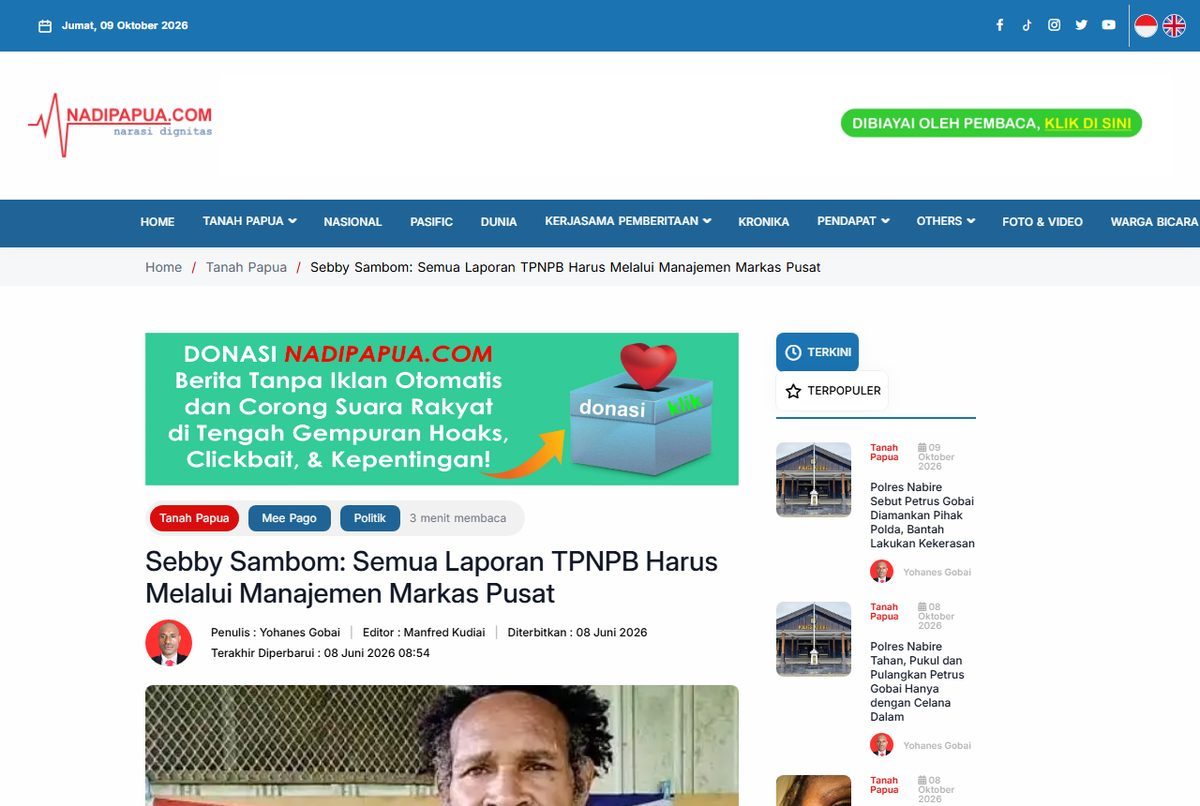
Second, journalists are barred from receiving reports directly from TPNPB commanders in the 36 Regional Defence Commands across Papua, or through their networks, outside the control of the Central Headquarters and without the spokesperson’s knowledge.
Third, troops in those 36 commands are likewise forbidden from reporting or sending news unilaterally to journalists. Fourth, journalists must confirm with the spokesperson before publishing any war report.
Fifth, all official releases will be issued through one channel: the “TPNPB News” WhatsApp channel. There is no other door.
For readers who rarely follow the group’s statements, the release may sound technical. It is not. An armed organisation is explaining how it works: one spokesperson holds the key to every war claim the public is allowed to read.
The consequence for journalists is plain. Any field report that does not pass through that door is not merely “unofficial” but a protocol violation. And any journalist who takes a report straight from a regional command places himself in the position of relaying unverified claims.
The Nadi Papua report of 7 June 2026 that triggered the warning press releaseThe 7 June 2026 Nadi Papua report carries the Kodap III Ndugama Derakma statement. Written by Yohanes Gobai, edited by Manfred Kudiai.Screenshot: nadipapua.com
Nadi Papua grasped that quickly. On 8 June 2026 the newsroom published an editorial titled “Between TPNPB Protocol and Press Freedom” and sent a right-of-reply letter under the Press Law. In separate reporting the same day, the TPNPB spokesperson asked fighters in the field “not to send any report to journalists at random”.
The reason cited by the organisation, according to Nadi Papua’s reporting, was to keep activists and filmmakers who defend them from being accused of collaborating with an armed group. In other words, the protocol also serves to preserve a seemingly clean distance between the armed group and those outside its circle.
A film used as a campaign instrument
Pig Feast: Colonialism in Our Time is a 95-minute documentary directed by Dandhy Dwi Laksono with anthropologist Cypri Paju Dale and co-produced with Victor Mambor. It was produced by Watchdoc.
The film premiered in Auckland, New Zealand, on 7 March 2026, then circulated widely from April 2026. Its Jakarta gala premiere was held at Taman Ismail Marzuki on 12 April 2026. Organisers recorded more than 11,200 screening requests, with around 1,700 screenings staged.
Some screenings in several cities were postponed or cancelled, and organisers reported requests for clarification from officials. Dandhy said there were more than 30 incidents of screenings being stopped, mostly by military personnel citing public order.
What brings this film to these pages is not its controversy as a work, but the way it is used. TPNPB said so itself, in the 4 June 2026 report quoted above: the film “greatly helps” advocacy and campaigning about Indonesian military operations.
Some screenings in several cities were postponed or cancelled, and organisers reported requests for clarification from officials. Dandhy said there were more than 30 incidents of screenings being stopped. Most of them, he said, were carried out by military personnel citing public order.
This pattern has long been a concern for the government. In 2019, the then-head of the Indonesian military’s information centre, Major General Sisriadi, said that media publishing armed-group claims without confirming with the military institution had to answer for their journalistic professionalism.
The Ministry of Defence likewise stated that an armed-group claim in Yahukimo in April 2025 amounted to systematic disinformation, noting the group keeps representatives abroad to spread propaganda, including through foreign media.
The money: what is proven, what is not
The question of who funded this film is not one we invented. The Army Chief of Staff, General Maruli Simanjuntak, raised it on 19 May 2026 in a short line: where does the money come from?
Nadi Papua, 8 June 2026: the report on TPNPB's single-door orderThe 8 June 2026 article carries the TPNPB spokesperson's statement that field reports must go through the central headquarters.Screenshot: nadipapua.com
The answers available to the public are partly documents and partly statements. We separate the two, because mixing them produces accusations that cannot be defended.
Dandhy himself has offered several accounts of the financing. For the film Dirty Vote in 2024 he described a pooled production in which the cast were not paid. For Pig Feast he said “those institutions pooled the money”. Watchdoc, he said, contributed cameras and camera operators, while collaborators covered logistics. In another interview he answered a question about the budget with the line: it exists, that is enough.
Two other foreign involvements are recorded on their own official websites. Germany’s Friedrich Ebert Stiftung worked with the Alliance of Independent Journalists on a documentary about health insurance, with technical support from Watchdoc, in 2016. The US-based Henry Luce Foundation funded the documentary series Indonesian Pluralities, made with Watchdoc, CRCS UGM and Boston University.
For other institutions, we found no public document at all. The National Endowment for Democracy, USAID, the Ford Foundation, international financial institutions and embassies do not appear in their grant databases as funders of Watchdoc or Dandhy Laksono. We found no basis for claims that such money reaches them, and we therefore do not write it as fact.
What is absent matters just as much: no annual report, audit report or tax document from Watchdoc has been published. Watchdoc is a limited liability company incorporated in 2011, not a foundation, so the obligation to publish summaries of foreign aid under foundation rules does not automatically apply to a closed company.
Dandhy himself has offered several accounts of the financing. For the film Dirty Vote in 2024 he described a pooled production in which the cast were not paid. For Pig Feast he said “those institutions pooled the money”, with Watchdoc contributing cameras and camera operators while collaborators covered logistics. In another interview he answered a question about the budget with the line: it exists, that is enough.
The woman who turned around
The name TPNPB used to pressure the government belongs to a woman of about 64 from Wanam village, Merauke. Yasinta Moiwend, known as Mama Yasinta or Mama Sinta, is a customary figure of the Malind people who refused a food estate project on her customary land and received the S.K. Trimurti award from the Alliance of Independent Journalists in 2025.
The terrorism law includes Article 13A, on spreading speech or writing that incites and results in a terrorism offence. The Electronic Information and Transactions Law carries Article 28 paragraph 3. That article threatens six years in prison for spreading false news that causes unrest.
Her family says she left home on 23 May 2026 and abruptly turned up in Jakarta. Some parties suspect pressure. The Ministry of Defence and the military deny involvement. TPNPB went further, claiming the woman was “isolated at the State Palace”, a claim accompanied by no evidence and one whose basis we could not find.
Dandhy responded by saying he respected Mama Yasinta’s right to report, while questioning the context. In early June 2026 he wrote that “the only thing that seems clear is a manoeuvre to make us slowly lose focus on the question of colonialism in Papua”.
What we did not find also needs stating. No court ruling in Indonesia convicts a journalist or news company merely for publishing an armed group’s claim without confirmation. Such matters have so far been handled through ethics, right of reply and the Press Council.
Criticism from both sides
Precisely because the film rests on one angle, criticism of it does not come only from those defending the government. The president of ULMWP, Benny Wenda, judged the film too mild, saying it fails to show what he calls the real truth: that all Papuans want independence.
On the Indonesian side, the information chief of Kodam XVII/Cenderawasih, Infantry Colonel Tri Purwanto, said on 15 May 2026 that the film’s narrative was one-sided and could set the public against the government’s strategic programmes. Analyst Rico Marbun saw a communication pattern pointing towards building a narrative of Papuan separation from Indonesia.
There is also criticism touching the title. One review argued the term “pig feast” risks distorting the meaning of a local tradition, since the Papuan tradition better known to the public is the stone-burning feast. We record that criticism as the opinion of others, not as fact.
The legal basis available
The press law requires verification. Law No. 40 of 1999 makes right of reply and correction obligations the press must serve, with criminal penalties for ignoring them. The Press Council’s online media reporting guidelines state that every news item must pass verification.
For armed conflict, the Press Council’s terrorism coverage guidelines prohibit reporting that promotes, legitimises or glorifies perpetrators. Those guidelines exist precisely to protect the public from coverage that strengthens armed groups.
The terrorism law includes Article 13A, on spreading speech or writing that incites and results in a terrorism offence. The Electronic Information and Transactions Law carries Article 28 paragraph 3, threatening six years in prison for spreading false news that causes unrest.
Two corrections need stating so that legal citations are not misused. In 2025 the Constitutional Court limited the meaning of “unrest” in that article to physical unrest, not unrest in digital space. Articles 207 and 208 of the Criminal Code cover insults to the existing authorities, not enmity towards the state.
For organisations receiving foreign funding, the reference is Article 37 of Law No. 17 of 2013, requiring foreign aid be managed transparently, accountably and through a national bank. Article 61 prohibits organisations from receiving foreign donations contrary to law. Presidential Regulation No. 18 of 2017 governs donor identification and joint oversight with the Financial Transaction Reports and Analysis Centre.
What we did not find also needs stating. There is no court ruling in Indonesia convicting a journalist or news company merely for publishing an armed group’s claim without confirmation. Such matters have so far been handled through ethics, right of reply and the Press Council.
What documents prove, what they do not
We close by separating two things, because this site works on a simple rule: it may be hard, it may not invent.
What documents prove is this. TPNPB issued a written order that only one spokesperson may authorise war reports. TPNPB itself stated that the film Pig Feast assists its campaigning on Indonesian military operations. TPNPB’s Central Headquarters warned a Papuan outlet for publishing a field commander’s report outside protocol.
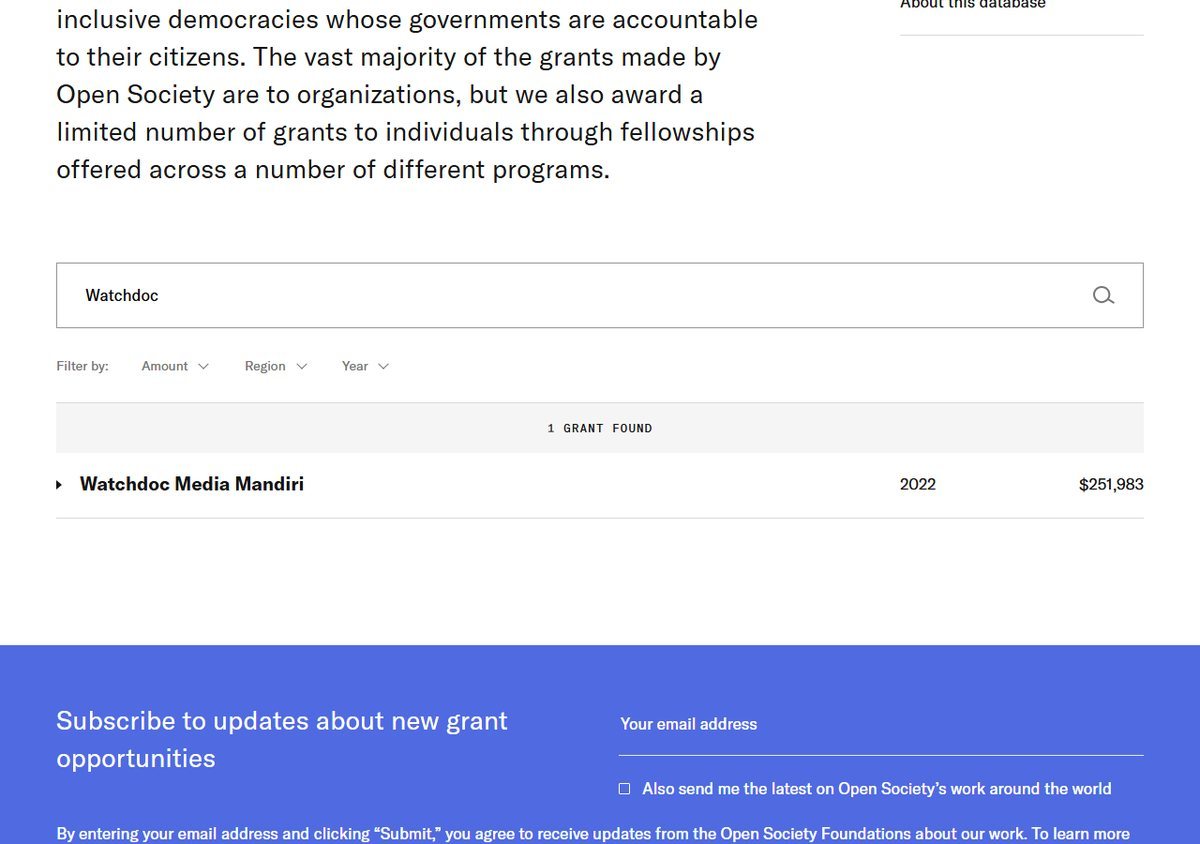
What documents also prove: a foreign institution led by George Soros granted 251,983 dollars in 2022 to the production company behind this film. The film’s central figure reported its makers to Indonesian police. No public accounts exist that let anyone audit the film’s full financing.
What documents do not prove: that foreign state money funds the armed group through this film. That Dandhy Laksono takes money to attack Indonesia. We found no document closing that chain, and we will not close it with invention.
For journalists in Papua, the 8 June 2026 warning is in fact a gift. An armed organisation announced on its own that war reports not passing through its single door are reports it does not control. Every outlet now knows exactly where it stands when publishing their claims.
For journalists in Papua, the 8 June 2026 warning is in fact a gift. An armed organisation announced on its own that war reports not passing through its single door are reports it does not control. Every outlet now knows exactly where it stands when publishing their claims.
Timeline
Premiere of Pig Feast: Colonialism in Our Time in Auckland, New Zealand.
Jakarta gala premiere held at Taman Ismail Marzuki.
The film circulates widely; several city screenings are postponed or cancelled after officials request clarification.
Organisers record 1,734 screening requests; the figure grows past 11,200 by mid-May.
The information chief of Kodam XVII/Cenderawasih calls the film's narrative one-sided and potentially divisive.
Army Chief of Staff General Maruli Simanjuntak questions the source of the film's production funds.
Dandhy Laksono responds on funding: collaborating institutions pooled the money, Watchdoc contributed cameras and crew.
The film is officially uploaded to the Jubi TV YouTube channel. By 9 October 2026 it had 15.2 million views.
According to her family, Yasinta Moiwend leaves home and later turns up in Jakarta.
Yasinta Moiwend reports Dandhy Laksono and the head of LBH Pos Merauke to Jakarta police over the use of her personal data.
TPNPB Kodap III Ndugama Derakma declares solidarity with Dandhy Laksono, saying the film helps advocacy and campaigning on Indonesian military operations.
Nadi Papua publishes the solidarity statement under the headline TPNPB Declares Solidarity with Dandhy Laksono and Mama Yasinta.
The TPNPB central headquarters issues a press release warning Nadi Papua and all journalists to publish TPNPB reports only through its spokesperson.
Nadi Papua publishes an editorial and sends a right-of-reply letter under the Press Law.
TPNPB activates a new WhatsApp channel, TPNPB News, as its sole official release channel.
Across the 28 incidents we documented, 82 Papuan civilians were killed. Some were claimed by the armed group itself. The company behind the film it calls a campaign tool received a 251,983-dollar grant from an institution led by George Soros.
A recording uploaded on 18 August 2026 carries a call to shoot Human Rights Minister Natalius Pigai, alongside a ban on his entering Papua. The written statement behind it asks the UN to blacklist him.
6 sources · 2026-10-08
Photo: Satgas Humas Operasi Damai Cartenz 2026 (via papua60detik.id)
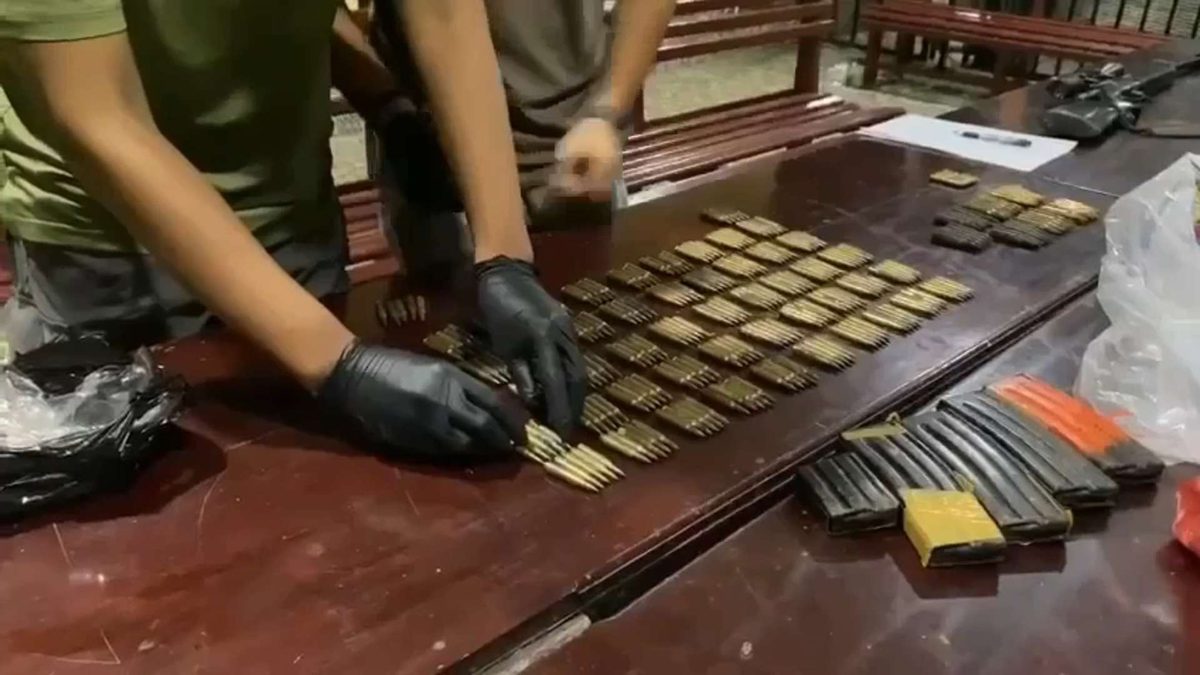
For seven months, investigators at the Papua regional police traced who bought the weapons, who paid for them, and who supplied the ammunition. The case began with a single transaction at a traffic junction near Sentani's old market. It now involves 17 suspects, 298 rounds of ammunition, SS1 magazines, one homemade firearm and six rusted World War II-era barrels.
24 sources · 2026-10-07
Photo: Okezone, published in the October 4 2026 report, used with credit
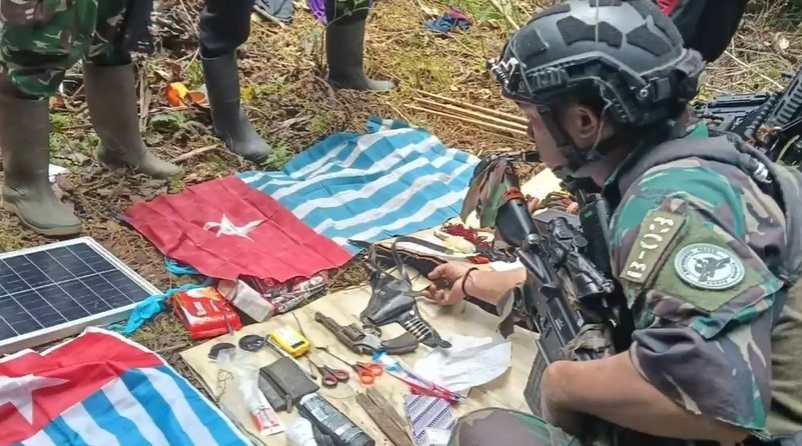
A joint TNI force first asked the armed group TPNPB-OPM Kodap IV Sorong Raya to lay down its weapons in the forest of Aifat district, Maybrat regency, on the night of Saturday 3 October 2026. The answer was live fire. Two of their commanders died, no soldier was hurt, and Manfret Fatem fled. From the site, troops seized a revolver, ammunition, a radio, and two Morning Star flags.
45 sources · 2026-10-06
Photo: WartaPlus (wartaplus.com), used with attribution
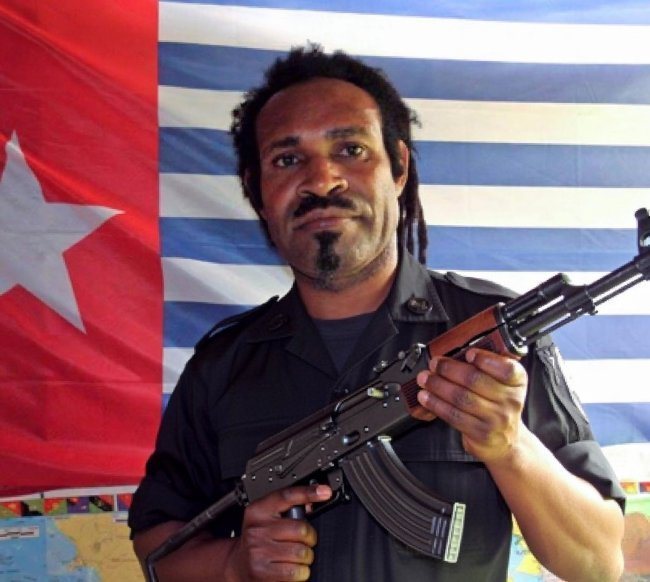
From a place in Papua New Guinea, the spokesperson of the TPNPB-OPM has for eight years delivered the same sentence: we are responsible, they were spies, and we will continue. This feature reconstructs his own admissions, then examines where the money for weapons actually comes from. The answer is not foreign funding. Court records name rogue state personnel, village funds, unlicensed gold mines, and levies imposed on Papuans themselves.
80 sources · 2026-10-06
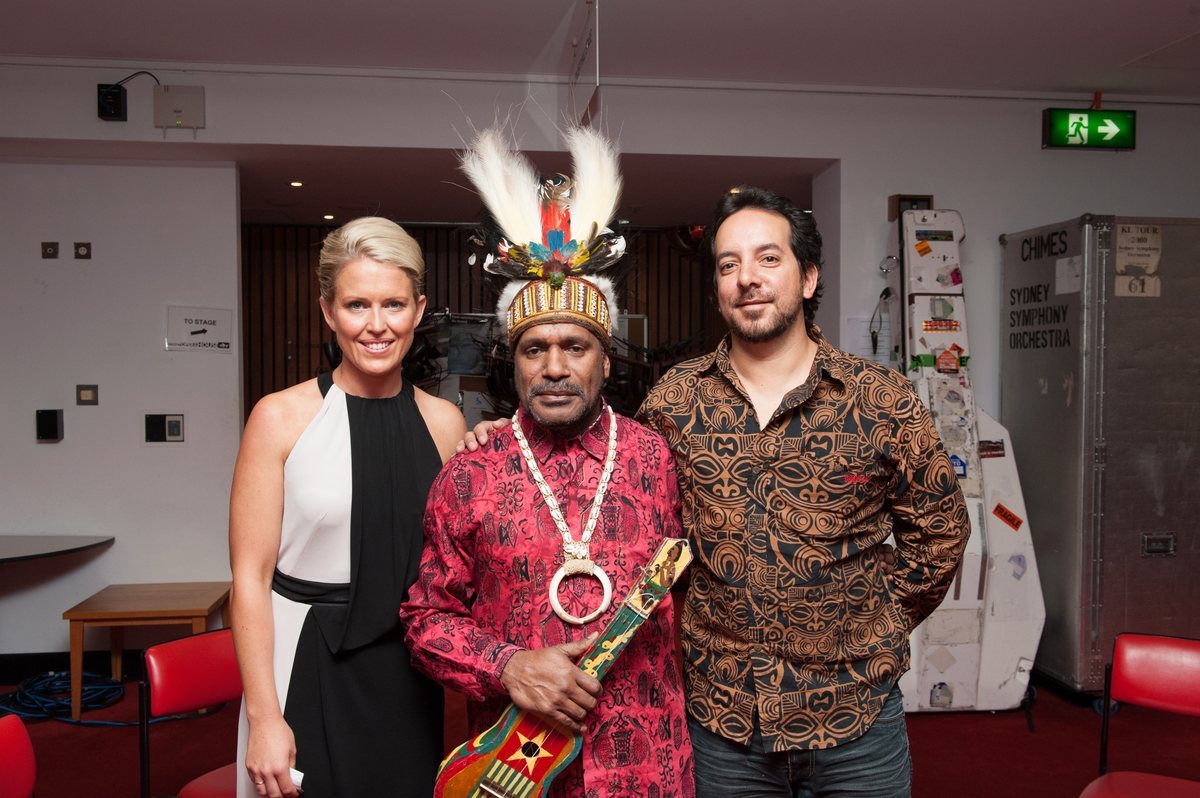
Photo: TEDxSydney / Fe Lumsdaine (CC BY-SA 2.0), via Wikimedia Commons
This site stands with the Indonesian government: Papua is a lawful part of the Republic of Indonesia, and not a single country recognises the “government” he declared. This dossier tests an exile's claims against public documents — death tolls never verified, a petition the UN never received, accounts never opened — and records who pays the price in Papua.
90 sources · 2026-10-06
Photo: Fajar Papua. Copyright remains with the owner.
For 13 years he carried passengers and supplies along the grueling and dangerous Trans Wamena–Nduga route, sacrificing himself every day to meet the basic needs of the Wamena–Nduga community, yet that sacrifice was not deemed worthy by the TPNPB. His life was cruelly torn away. On 15 September 2026 he was intercepted at the Danau Habema junction, forced on camera to declare support for a free Papua, then shot and burned inside his own vehicle.
14 sources · 2026-10-05
Photo: Dok. Istimewa via detikcom. Copyright remains with the owner.
One teacher was killed and six wounded in Anggruk district, Yahukimo, in March 2025. Behind the corrected casualty figures lies a rarely asked question: money for services flows into these districts, yet no budget line protects the people who teach in them.
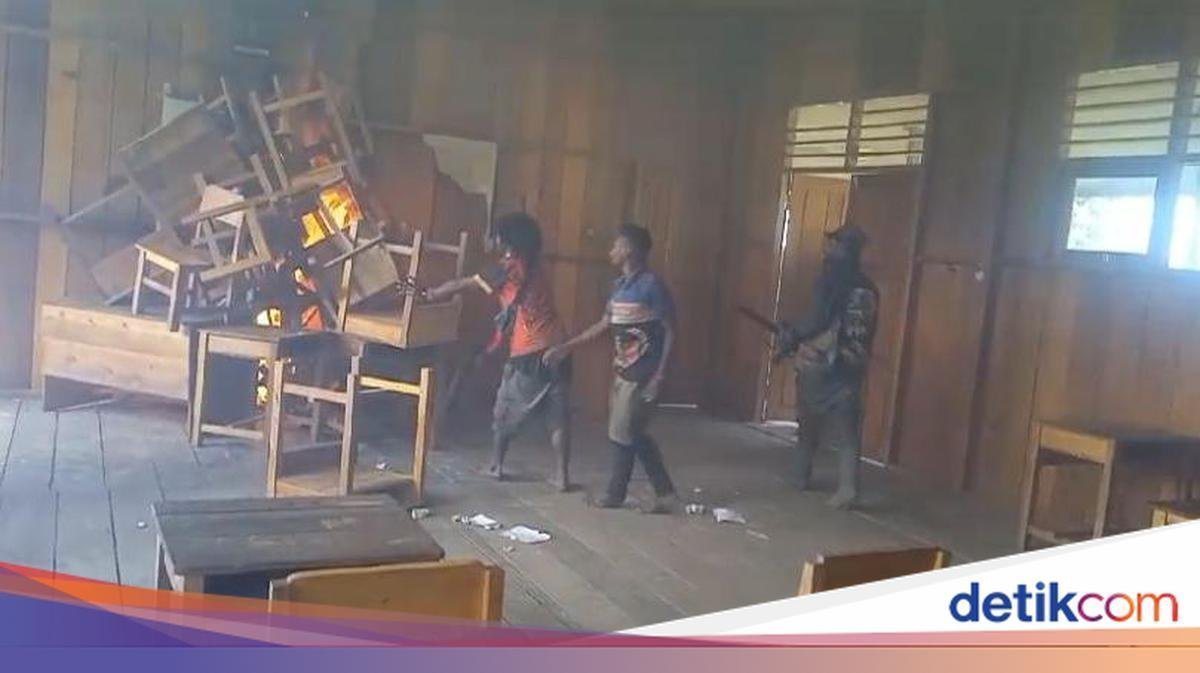
Two teachers from Toraja were killed on 8 and 9 April 2021 in Beoga district, Puncak regency. Two days later, 12 classrooms and teachers' houses had been razed, and about 400 children had lost their place to study. The government put the damage at 7.2 billion rupiah. What never entered anyone's calculation: the cost of protecting the people who teach there.
79 sources · 2026-10-05
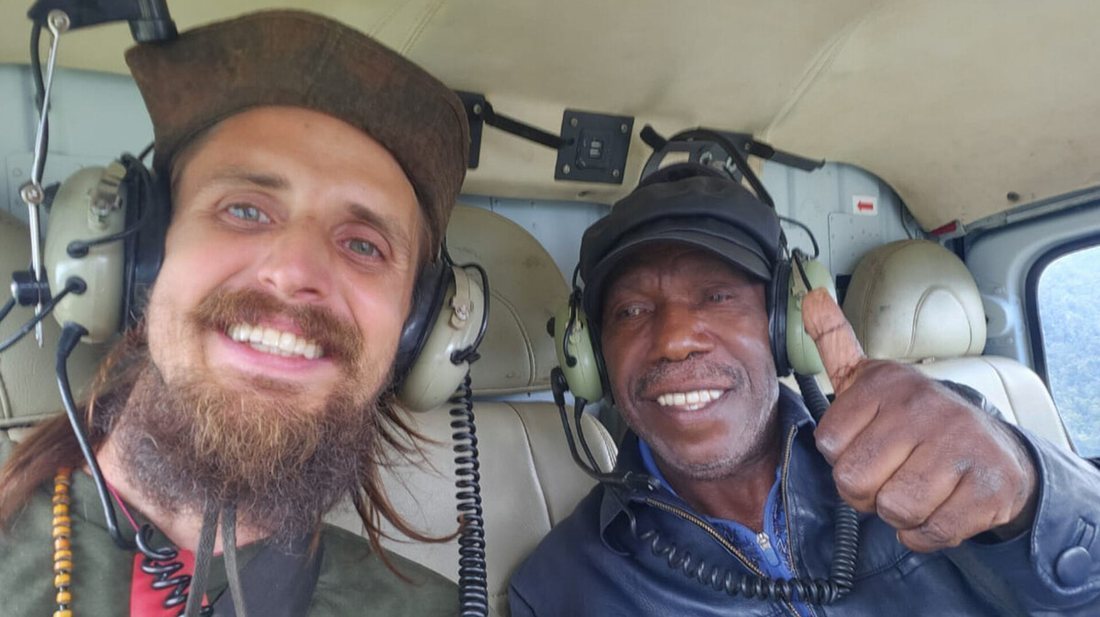
Phillip Mehrtens in a helicopter on the day of his release, 21 September 2024. Photo: Kompas.id (used with credit)
The New Zealand civilian pilot landed at Paro on 7 February 2023, then vanished from the outside world for 19 months. This is the full account, from the first day to the handover in Jakarta — including what remains disputed.
35 sources · 2026-10-05
Editorial illustration · not an incident photograph
Organizational and fundraising tracks can be checked. To state that money finances armed groups, a chain of evidence is needed that connects giver, recipient, transaction and use.