KKB in Nduga Killed 11 Civilians: Eleven Names on the Batas Batu Road
A road in the Papuan highlands, a truck that left at dawn, and eleven people who only wanted to work. This page tells it like a story, but not one name or number in it was invented.
Redaksi Papua Blood Money2026-10-09 · 16 min read
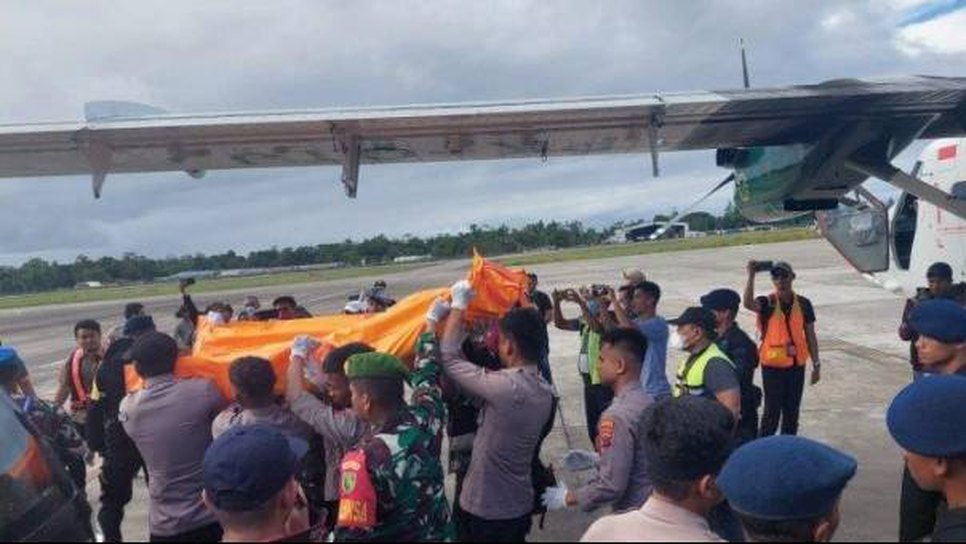
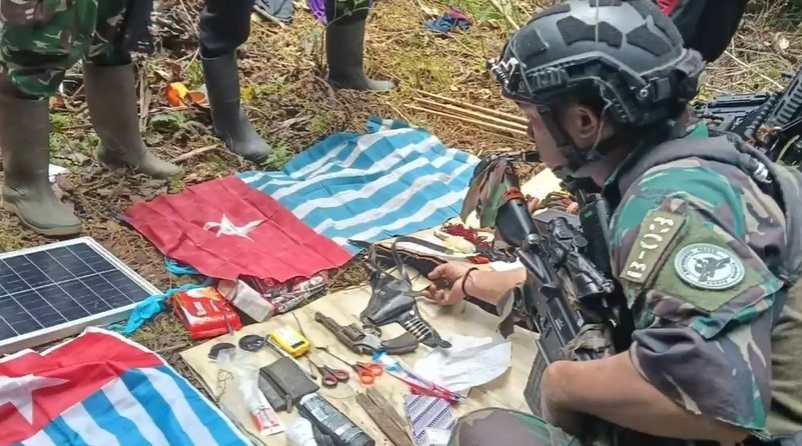
Photo: Papua Police Public Relations, used with attribution
In the highlands of Papua there is a road that links Kenyam with a place called Batas Batu. It is narrow, stony, and curves along the slopes. Every morning the timber trucks come down that road looking for passengers: people going to sell, people going to work, people going home.
This is not a fairy tale. Every name, date and sentence on this page comes from documents, testimony, reporting, and the words of the man who did the shooting. All of it happened, and a pastor never made it home because of it.
A Good Morning to Go to Work
That morning began like any other in Kenyam. Mist still clung to the slopes, and the timber trucks were already queued for their loads. A driver checked his tyres. A trader counted change in a plastic bag. Somewhere in the distance someone started an engine, and a thin line of smoke rose into the cold air.
The truck that left that morning carried traders, a driver and construction workers. They were not men with enemies. They were men with debts, with children, and with work that had to be finished that day.
One carried rice to sell. One carried tools in a sack. One carried only change for customers and a promise to be home by evening.
The Truck That Stopped in the Wrong Place
Some fifty metres ahead, the road ended. Twenty men stood in the middle of it. Three carried long guns. One carried a silver pistol.
In Nduga every driver knows one thing that no one has to teach him twice. When armed men stand in the middle of the road, you stop, you get down, and you pray. There is no other way. There is no detour. The forest on either side is no place to run.
At 09.15 Eastern Indonesian Time, on Saturday 16 July 2022, the shooting began.
Police called it indiscriminate shooting. One witness called it a volley that would not stop. And when it stopped, the people still alive ran in different directions, because that is what human beings do when no direction is truly safe.
Eleven Names, Eleven Reasons to Come Home
Yulius Watu was twenty-three. He came from Ulubelu village in Ngada regency, on the island of Flores. He was the eldest, and his sisters were twins. His father, Hilarius Wuli, keeps one memory he repeats whenever he is asked: this boy never once pinched or scolded his little sisters.
Yulius did not continue his studies. He went to work in Papua, as thousands of young men from Flores, Toraja, Selayar and Maluku had before him. He sent money home, and that is why he was on that truck that morning.
Hubertus Goti was also from Ngada. His family prepared that year's Christmas with one chair kept for him. The chair stayed empty.
Daeng Marannu was forty-two, from Selayar, and people called him ustaz. Taufan Amir, forty-two, was also from Selayar. Johan was twenty-six, from Manggarai. Alex, forty-five, from Kei in Maluku. Nasjen, forty-one. Yuda Nurusinga, forty-two.
Mahmud Ismaun was fifty, the man who usually drove the regent of Nduga wherever he went.
Then there was Eliaser Baye. He was fifty-four, a pastor of the Indonesian Gospel Tabernacle Church in Yereitma village, Pija district. He was in Nduga for a church conference, and before heading home he took that road with the others. He left behind a wife and six children.
His body was not flown out with the others. He was buried in Kenyam, in the ground where he served. His congregation walked with him to the grave, then went home with one question they could not answer: why did a pastor have to die on that road?
And the eleventh was found two days later, not far from that same road: Roy Manampiring, a construction worker. He never made it home, and his name was recorded last because his body was found last.
Eleven people. Eleven names. Every one of them had a reason to come home.
Four Places, Four Directions of Flight
When officers swept the area, they did not find one crime scene. They found four.
One body on the road near the truck. Three near a motorcycle. Six near a grocery kiosk, three metres from the first point. One more behind the kiosk. The last was found on a slope at the roadside, not far from the regent's car.
Those four places tell of four directions of flight. Of men who left the truck and ran to the kiosk, hoping a wooden wall could stop bullets. Of a man who tried to get back to the road. Of a man who chose the slope, because that was where there might be a tree.
Several victims were not only shot. Police said some suffered sharp-force wounds. They were slashed before or after the bullets went in.
Inside the truck a man named Sudarmin, thirty-six, from Selayar, lay flat in the bed. He did not run. He pressed his body against the wooden floor and hoped no one would look back. From there he heard the volleys, one after another, from the road.
He lived. He described what he heard, and his account became the only voice from inside that truck that reached us.
Ten died at the scene and two were critically wounded. The eleventh was found two days later, as officers swept the area: a construction worker named Roy Manampiring. The toll became eleven dead and two wounded.
The Man Who Admitted It, and the Reason Behind the Trigger
Four days later, someone admitted it. Not in a whisper, not through an intermediary. He spoke to the media, under his own name.
His name was Egianus Kogoya, commander of Kodap III Ndugama Derakma. He described that morning the way a man describes finished work. His fighters entered Kenyam. They raised the Morning Star flag at Nogolait at 08.30.
Then he gave one detail that explains everything. From the truck, he said, he saw a civilian quietly taking photographs and video. He suspected him of being a spy. So he shot him.
One suspicious man. One finger on a trigger. And eleven people dead in four different places on the same morning. That is how a suspicion becomes a massacre: without an order, without a court, without a single chance to explain yourself.
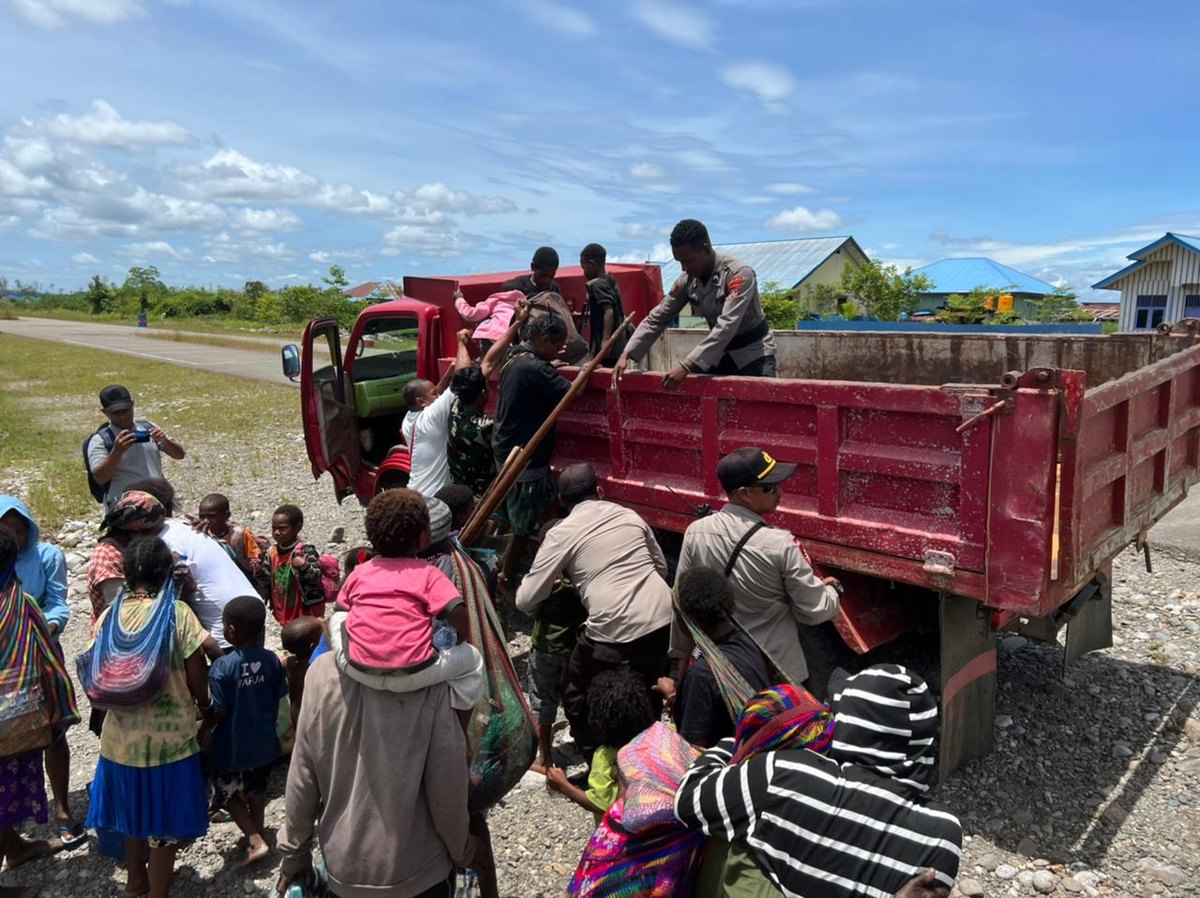
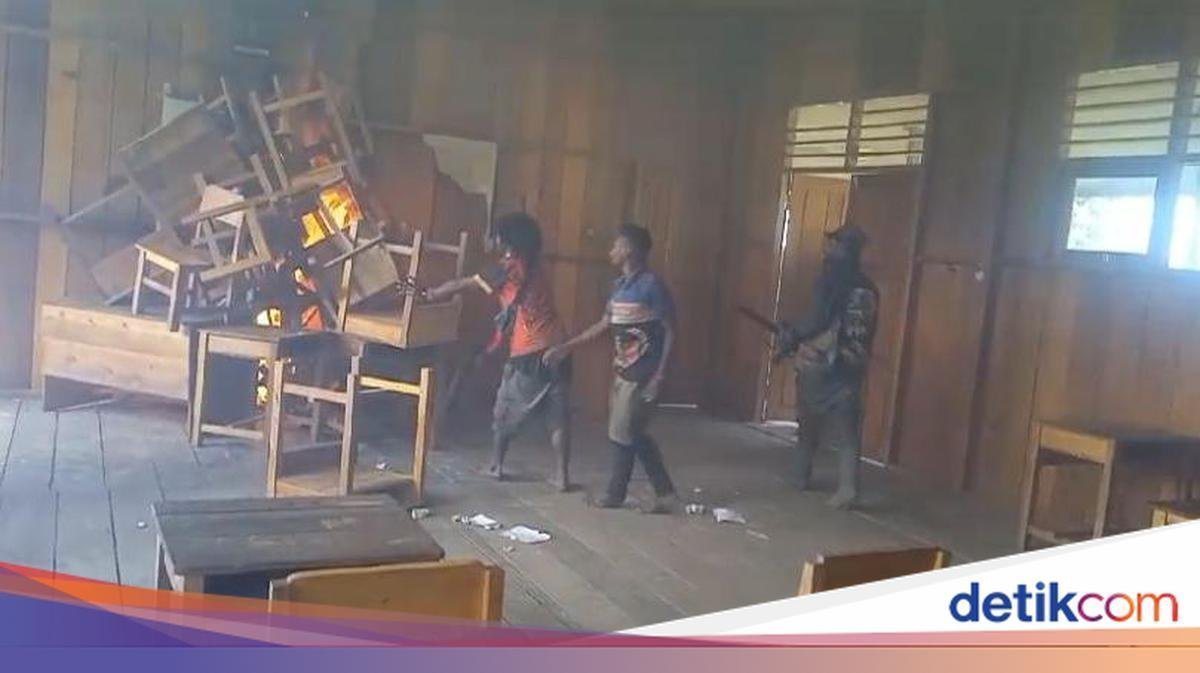
Residents of Paro district evacuated towards Kenyam after terror by the armed groupResidents of Paro district are evacuated to Kenyam after terror attacks and the burning of an aircraft. The distance from Paro to the nearest district takes four to five days on foot.Photo: Papua Police Public Relations / Tribratanews Polri, used with attribution
Egianus did not stop there. He said one sentence that anyone treating this as an accident of war should read twice. Whoever they are, he said, be they civilians, employees, workers, whether Papuans or non-Papuans, we will not compromise.
In another statement he described his victims as Indonesian intelligence disguised as project employees and kiosk keepers. He described the pastor he shot with one word: a spy.
A General Answered in One Short Sentence
Three days after the massacre, in Jayapura, a general stood before reporters. His name was Brigadier General Juinta Omboh Sembiring, commander of Korem 172/Praja Wira Yathi. He did not speak about war. He spoke about who those victims actually were.
These people, he said, are not the ones often described as intelligence and so on. There are none. There is no state apparatus. They are economic actors.
Traders. A truck driver. Construction workers. People who built Nduga in the simplest way a human being can: by working, by selling goods, by carrying passengers, by cooking and planting.
In Jakarta, two institutions that rarely agree on much agreed on one point. The National Human Rights Commission called the act an extraordinary crime. Amnesty International Indonesia urged a thorough investigation, and said something rarely said outright: if this group regards its struggle as part of a war for freedom, it should not attack residents, especially since Papua is not a war zone.
The churches of Indonesia asked the government to form an independent investigation team. The request came from church tables that had lost one of their pastors on the Kenyam and Batas Batu road.
Days later, from the mouth of the same group's spokesperson, came a threat that completes this whole story. Indonesians, he said, whether teachers, nurses, any employee, are forbidden from entering the area. We are ready to shoot.
What Happened Before That Morning
Read as a single event, Nogolait feels like a disaster. Read across the whole file, it becomes something worse: a habit.
The security task force recorded sixty-five violent actions by the same group since 2017. Three of them were massacres of civilians. The first at the Kenyam airport complex in 2018, where three residents died.
The second in December 2018, when nineteen Trans-Papua bridge workers in Yigi district were killed on a hill after being forced into line. The third was the morning at Nogolait.
Between the two stands an event rarely quoted, because it is too heavy to write quickly. In October 2018 the group took fifteen to sixteen teachers and health workers hostage in Mapenduma district. One teacher was gang-raped.
The reason they gave was the same as at Nogolait. Those people were accused of being spies, and their crime was bringing a school and a health centre into the area.
In October 2020 a company employee in Kenyam named Yulius Wetipo was shot dead while riding to work. In February 2023 fifteen health-centre construction workers in Paro district were threatened with death and had to be evacuated. In August 2023 three civilians were killed in Yasoma village; their truck was burned after they were beaten.
A Regency That Slowly Went Quiet
Then came a consequence no one ever counted. The regency was slowly emptied.
Indonesia's Ombudsman recorded more than five thousand Nduga refugees in Wamena in 2019, with an estimated total of around forty-five thousand spread across neighbouring regencies. Eight districts were reported to be no longer inhabited.
Twenty-four schools in eleven districts stopped operating. Several health centres and community posts ceased to function. Ninety-eight churches stood without congregations. In Wamena an emergency school took in seven hundred and twenty-three children studying under a church roof, far from their villages.
Where the Bullets Were Bought
Now the part most uncomfortable not for the government, but for anyone claiming to fight for the people of Nduga.
Those bullets did not fall from the sky. They were bought. And part of the money came from a place no one can defend.
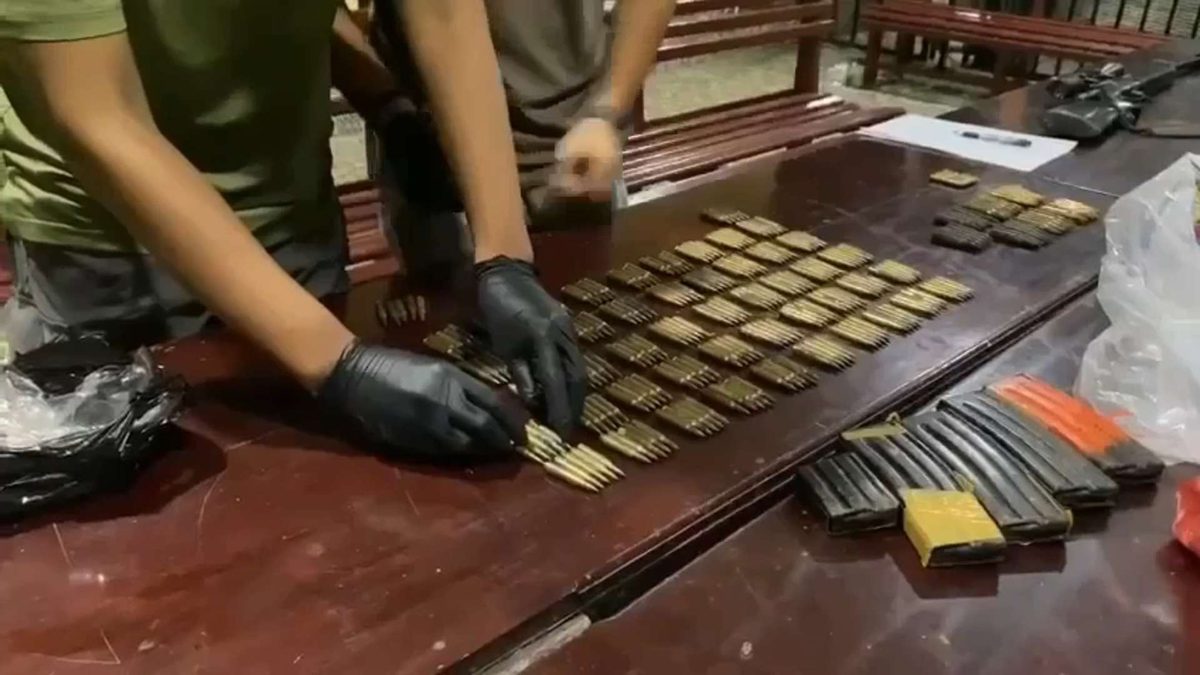
In August 2022 a village head in Nduga, identified as TL, revealed this to investigators. He had handed over one hundred and fifty million rupiah sourced from village funds to buy ammunition for Egianus Kogoya's group. A civil servant identified as AN was arrested carrying six hundred and fifteen rounds, and those rounds, according to investigators, were to be handed to the armed group in Nduga.
Read that sentence once more, calmly. Village money. Funds meant for roads, schools or clean water. Paid for the bullets used to shoot villagers.
Kenyam played another role in this story. The Nduga police chief called it the group's logistics centre. From photographs alone, he said, at least twenty-two firearms were visible in their hands.
Two of Egianus's men were once arrested in Kenyam with a Ferfrans rifle, a forty-millimetre Pindad grenade launcher and three hundred and eleven rounds. One of them was described by officers as the logistics controller, especially for ammunition.
Kenyam is only the small end of a far longer chain. In March 2025 officers dismantled a network that bought weapons for one point three billion rupiah from outside Papua, to be handed to the armed group in Puncak Jaya.
Seized: seventeen firearms, three thousand five hundred and seventy-three rounds, and three hundred and sixty-nine million rupiah in cash. The weapons were assembled in Bojonegoro, then shipped via Surabaya to Jayapura.
In 2026 officers dismantled the next network and found something rarely seen: the names of the people who paid. Two of them were recorded as contributors, paying one hundred and twenty-two million rupiah and thirteen million rupiah respectively. A single homemade rifle transaction reached eighty million rupiah.
Those prices have long been neatly documented in case files. Ammunition cost one hundred to five hundred thousand rupiah per round. Handguns cost fifteen to one hundred million rupiah. M16 or M4 rifles cost ninety to three hundred and thirty million rupiah. One July 2022 disclosure recorded fifty-two firearms, nine thousand six hundred and five rounds, with a total value of seven point two billion rupiah.
There is also a door from abroad. In January 2023 a foreign national named Anton Gobay was arrested over a shipment of ten Colt AR-15 rifles and twenty magazines from the Philippines, backed by an armed faction in Mindanao. Earlier still, officers recorded the Sangihe route for Uzi-type weapons.
And there is one source that has been in plain sight all along. The Financial Transaction Reports and Analysis Centre examined more than three thousand Papuan village-fund accounts. Almost ninety per cent of the money was withdrawn in cash.
In 2021 the same agency monitored funds at the Tolikara legislature and the Puncak regency government. A resident was caught then carrying three hundred and seventy million rupiah, plus a note of six hundred million rupiah in assistance for Lekagak Telenggen's group. The Papua police chief named another equally concrete source. Illegal gold mining in Paniai, Intan Jaya and Yahukimo, part of whose proceeds is handed to armed groups.
What We Did Not Write
Every story has a part that tempts you to exaggerate. This story has one too.
We found documents about weapons purchases, prices and the names of contributors. We found no document at all linking foreign institutional funds, diaspora fundraising or foundation grants to weapons purchases for the group in Nduga.
The documented diaspora fundraising is small and properly recorded: an online campaign raised three thousand seven hundred and thirty-four pounds sterling from eighty-one donors. An advocacy campaign in the United Kingdom is registered as a micro-entity with named backers, but no published figures.
The suspicion that corrupt Papuan officials' money flowed to armed groups was raised by the anti-corruption agency. The agency itself said proving it was difficult, and the official in question was ultimately sentenced to eight years not for funding armed groups, but for bribery and gratifications.
The large figures circulating about money flows in Papua also need to be placed correctly. The hundreds of trillions of rupiah once cited by the financial agency concern mining and natural resources nationally, not money flowing to Nduga. We refuse to use unrelated large numbers merely because they sound alarming.
If this part sounds less hard, so be it. What we are after is not the harshest version. What we are after is the version that cannot be denied, because a story that cannot be denied has only one weakness: it is true.
Rice to Sell, and a Plan to Come Home
Egianus Kogoya remains at large. The Papua regional police issued sixteen wanted notices linked to this group. A former soldier who defected and joined in December 2021 was named by officers as one of the masterminds. His name is Yotam Bugiangge. He is also wanted now.
As this story is written, no court ruling establishes who is responsible for the morning at Nogolait. No document shows that the case was ever legally resolved.
Indonesian law provides the route. The terrorism law covers the spread of inciting speech or writing that results in a terrorism offence. The press law requires verification and the service of a right of reply. The Press Council prohibits reporting that legitimises or glorifies perpetrators.
What is missing is not the law, but the justice. Eleven people died on that road. They were not combatants. They had no weapons. And they were never given a single minute to defend themselves.
We close this story with one sentence spoken by a general in Jayapura, because that sentence answers every accusation used to justify their killing. These people, the general said, are economic actors. Not intelligence. Not state apparatus. Not enemies in a war.
And if anyone asks why eleven ordinary people had to die on that inland road, the answer is not in what they did that morning. The answer is in what they carried: rice to sell, change for customers, tools, and a plan to come home.
Timeline
The group's first recorded action: the killing of Trans-Papua worker Yovicko Sondakh in Mugi district.
A Dimonim Air co-pilot was wounded when a Twin Otter was shot at Kenyam airport.
Attack at the Kenyam airport complex: three civilians killed, three wounded, one of them a pilot.
Fifteen to sixteen teachers and health workers were held hostage in Mapenduma district; one teacher was gang-raped.
Nineteen Trans-Papua bridge project workers were killed in Yigi district; four others remain missing.
Yulius Wetipo (36), a company employee, was shot dead while riding to work in Kenyam.
Ten civilians were killed and two wounded in Nogolait village, Kenyam district. Bodies were found at four locations.
The eleventh body, that of construction worker Roy Manampiring, was found as officers swept the area.
The village head of Wusi handed over Rp150 million of village funds to buy ammunition for Egianus's group; a civil servant was arrested with 615 rounds.
Susi Air pilot Phillip Mark Mehrtens was taken hostage in Paro district after his aircraft was burned.
Fifteen health-centre construction workers in Paro district were threatened with death and evacuated.
Two of Egianus's men were arrested in Kenyam with a Ferfrans rifle, a Pindad grenade launcher and 311 rounds.
Three civilians, including two Nduga civil servants, were killed in Yasoma village; their truck was burned.
Phillip Mehrtens was released after about nineteen months in captivity.
The Cartenz Peace task force dismantled a weapons network: 17 firearms, 3,573 rounds, Rp369 million in cash; the weapons were bought for Rp1.3 billion outside Papua.
The Yalimo-Yahukomo network was dismantled; two financial contributors were recorded, OB (Rp122 million) and YP (Rp13 million); 298 rounds seized.
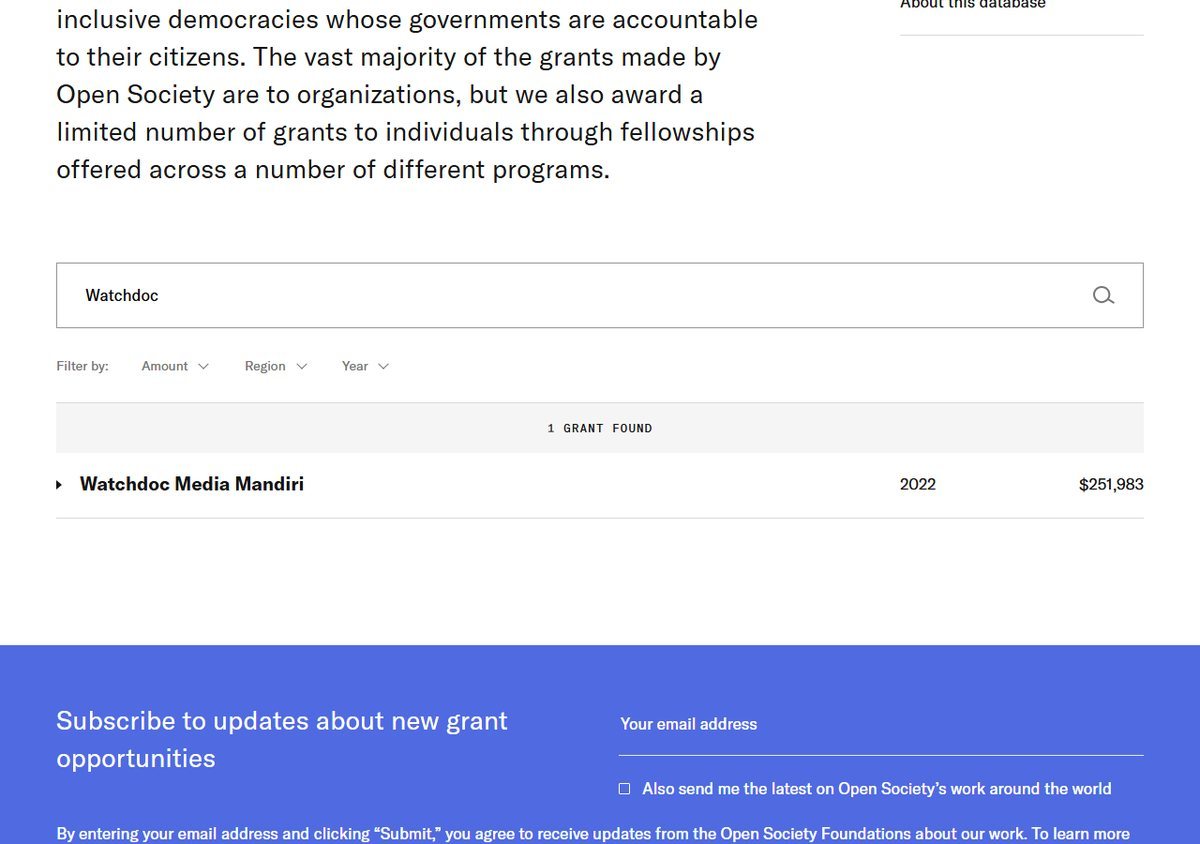
Across the 28 incidents we documented, 82 Papuan civilians were killed. Some were claimed by the armed group itself. The company behind the film it calls a campaign tool received a 251,983-dollar grant from an institution led by George Soros.
39 sources · 2026-10-09
Image: Jubi TV channel on YouTube, the film Pig Feast: Colonialism in Our Time (uploaded 22 May 2026)
The TPNPB central headquarters ordered all journalists to publish war reports only through its single channel, a day after a Papuan outlet ran a solidarity statement for a film the group said helps its campaign on military operations.
A recording uploaded on 18 August 2026 carries a call to shoot Human Rights Minister Natalius Pigai, alongside a ban on his entering Papua. The written statement behind it asks the UN to blacklist him.
6 sources · 2026-10-08
Photo: Satgas Humas Operasi Damai Cartenz 2026 (via papua60detik.id)
For seven months, investigators at the Papua regional police traced who bought the weapons, who paid for them, and who supplied the ammunition. The case began with a single transaction at a traffic junction near Sentani's old market. It now involves 17 suspects, 298 rounds of ammunition, SS1 magazines, one homemade firearm and six rusted World War II-era barrels.
24 sources · 2026-10-07
Photo: Okezone, published in the October 4 2026 report, used with credit
A joint TNI force first asked the armed group TPNPB-OPM Kodap IV Sorong Raya to lay down its weapons in the forest of Aifat district, Maybrat regency, on the night of Saturday 3 October 2026. The answer was live fire. Two of their commanders died, no soldier was hurt, and Manfret Fatem fled. From the site, troops seized a revolver, ammunition, a radio, and two Morning Star flags.
45 sources · 2026-10-06
Photo: WartaPlus (wartaplus.com), used with attribution
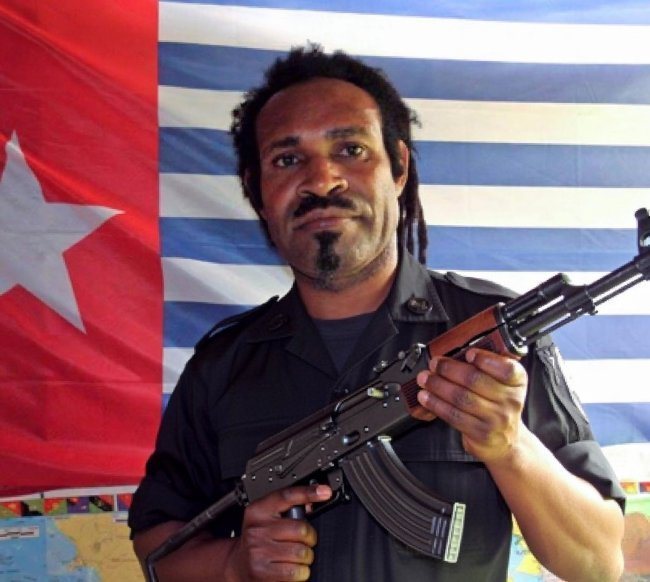
From a place in Papua New Guinea, the spokesperson of the TPNPB-OPM has for eight years delivered the same sentence: we are responsible, they were spies, and we will continue. This feature reconstructs his own admissions, then examines where the money for weapons actually comes from. The answer is not foreign funding. Court records name rogue state personnel, village funds, unlicensed gold mines, and levies imposed on Papuans themselves.
80 sources · 2026-10-06
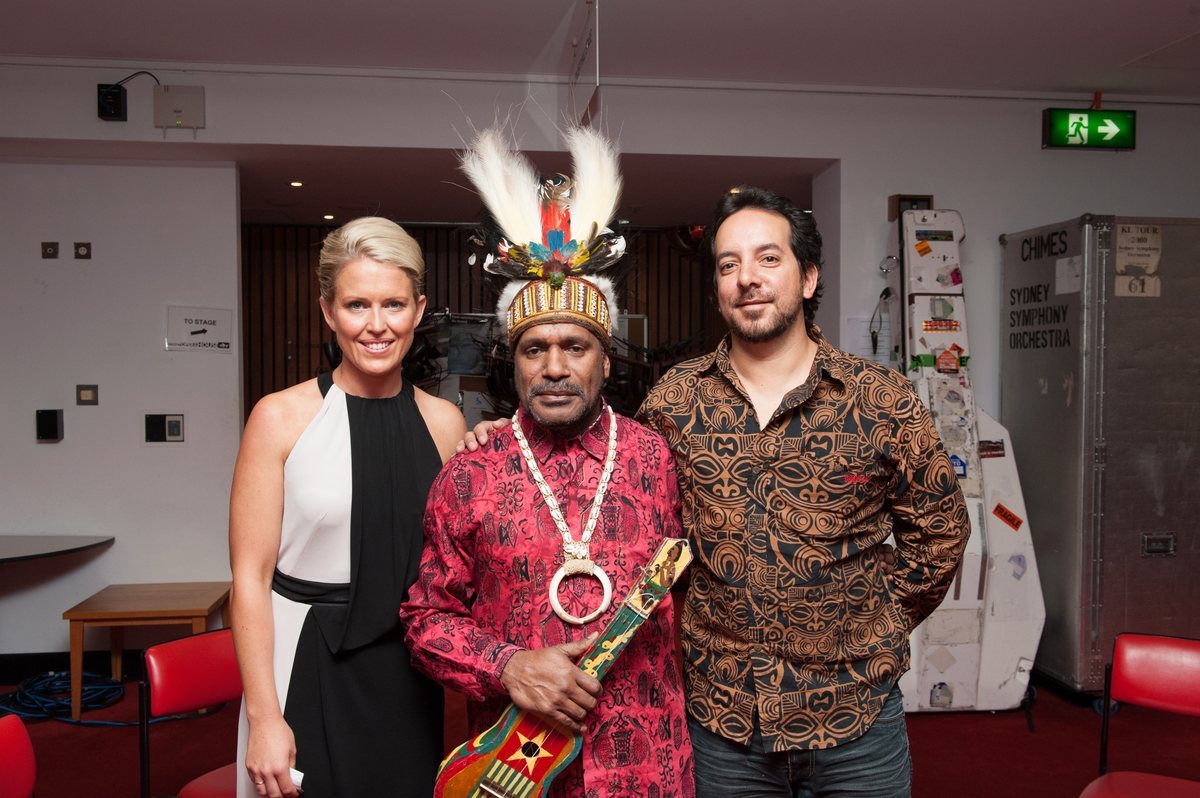
Photo: TEDxSydney / Fe Lumsdaine (CC BY-SA 2.0), via Wikimedia Commons
This site stands with the Indonesian government: Papua is a lawful part of the Republic of Indonesia, and not a single country recognises the “government” he declared. This dossier tests an exile's claims against public documents — death tolls never verified, a petition the UN never received, accounts never opened — and records who pays the price in Papua.
90 sources · 2026-10-06
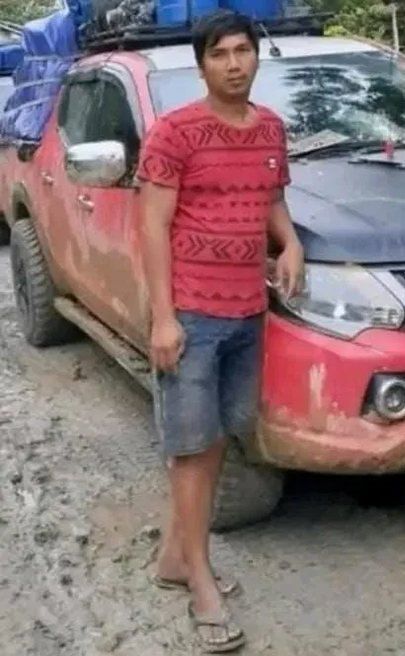
Photo: Fajar Papua. Copyright remains with the owner.
For 13 years he carried passengers and supplies along the grueling and dangerous Trans Wamena–Nduga route, sacrificing himself every day to meet the basic needs of the Wamena–Nduga community, yet that sacrifice was not deemed worthy by the TPNPB. His life was cruelly torn away. On 15 September 2026 he was intercepted at the Danau Habema junction, forced on camera to declare support for a free Papua, then shot and burned inside his own vehicle.
14 sources · 2026-10-05
Photo: Dok. Istimewa via detikcom. Copyright remains with the owner.
One teacher was killed and six wounded in Anggruk district, Yahukimo, in March 2025. Behind the corrected casualty figures lies a rarely asked question: money for services flows into these districts, yet no budget line protects the people who teach in them.
Two teachers from Toraja were killed on 8 and 9 April 2021 in Beoga district, Puncak regency. Two days later, 12 classrooms and teachers' houses had been razed, and about 400 children had lost their place to study. The government put the damage at 7.2 billion rupiah. What never entered anyone's calculation: the cost of protecting the people who teach there.
79 sources · 2026-10-05
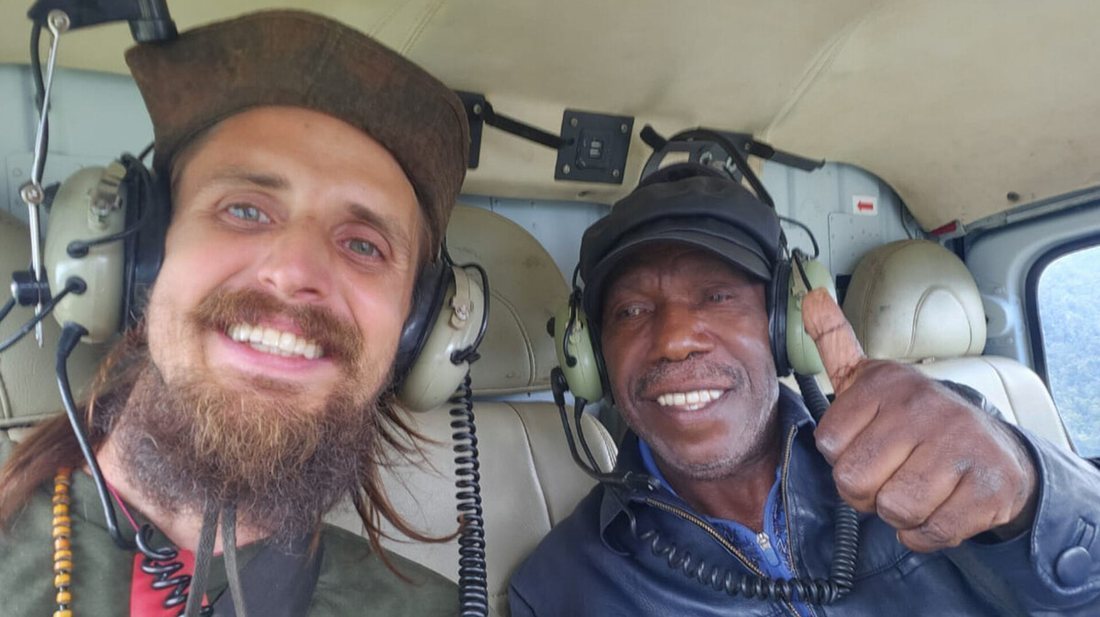
Phillip Mehrtens in a helicopter on the day of his release, 21 September 2024. Photo: Kompas.id (used with credit)
The New Zealand civilian pilot landed at Paro on 7 February 2023, then vanished from the outside world for 19 months. This is the full account, from the first day to the handover in Jakarta — including what remains disputed.
35 sources · 2026-10-05
Editorial illustration · not an incident photograph
Organizational and fundraising tracks can be checked. To state that money finances armed groups, a chain of evidence is needed that connects giver, recipient, transaction and use.